

Ebola Is Back — And This Time, It’s Spreading
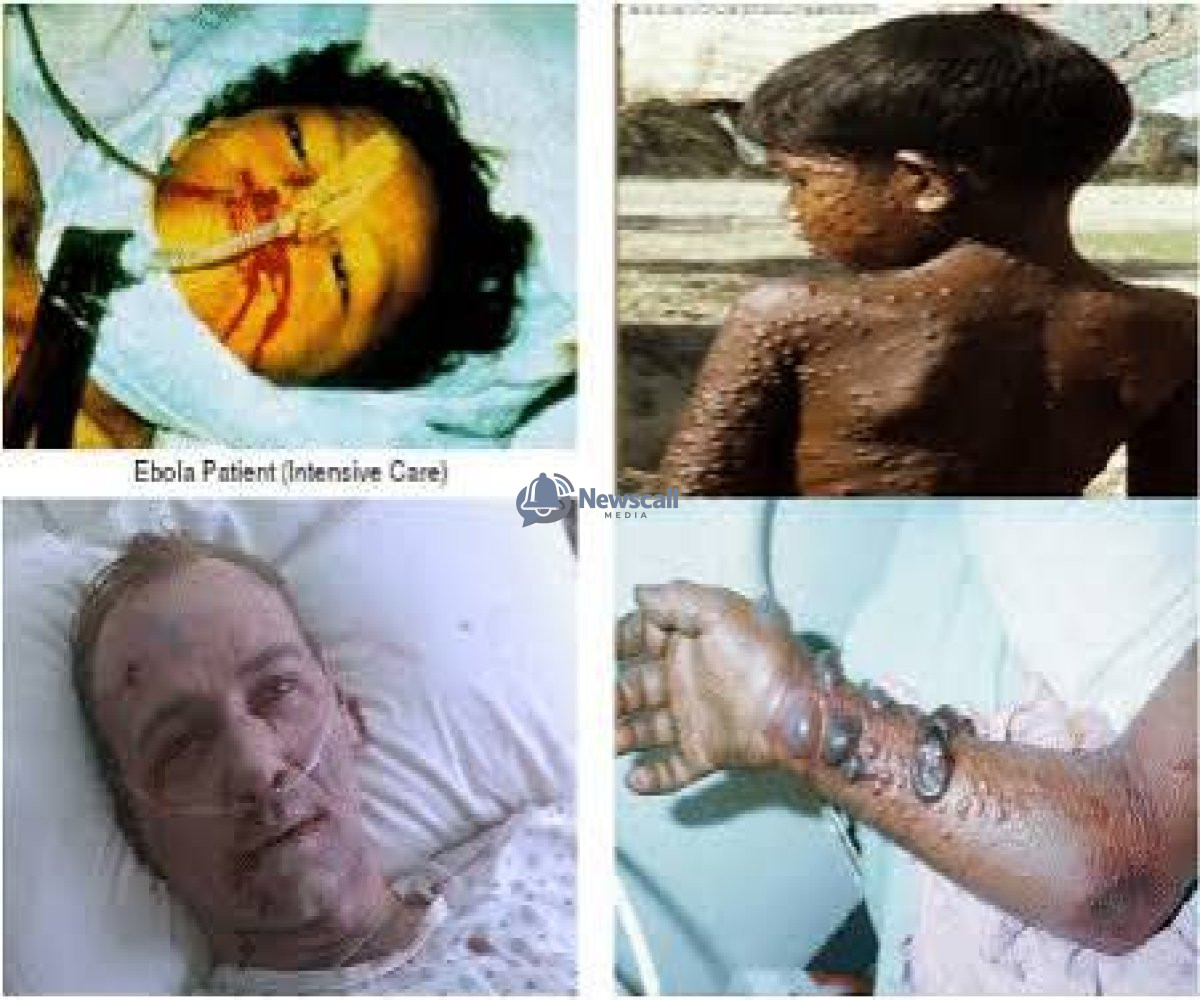
The Ebola virus disease is one of the deadliest viral hemorrhagic fevers known to mankind. With an average global case fatality rate of roughly 50% to 60%, and historical mortality rates ranging from 25% to 90% depending on the strain and access to early medical care, Ebola is not a virus the world can afford to ignore.
First identified in 1976 — believed to have crossed over from bats — Ebola spreads through direct contact with the bodily fluids of an infected person, whether living or dead. It begins with fever, aches, and fatigue, before progressing to diarrhea, vomiting, severe bleeding, and ultimately organ failure.
The Six Known Strains — Only Four Threaten Humans
There are six known variants of the Ebola virus:
• Zaire virus
• Sudan virus
• Bundibugyo virus
• Taï Forest virus
• Reston virus
• Bombali virus
Of these, only four pose a direct threat to human life:
Zaire virus (Orthoebolavirus zairense) — The most common and most deadly. Responsible for the largest outbreaks in history, including the catastrophic 2014–2016 West Africa epidemic. Without treatment, its case fatality rate can reach up to 90%, though modern therapeutics have significantly improved survival odds.
Sudan virus (Orthoebolavirus sudanense) — First discovered in 1976 alongside the Zaire strain, in what is now South Sudan. It carries a case fatality rate of around 50%.
Bundibugyo virus (Orthoebolavirus bundibugyoense) — First identified during a 2007 outbreak in Uganda. Slightly less deadly than its counterparts, with historical fatality rates averaging around 30%.
Taï Forest virus (Orthoebolavirus taiense) — Formerly known as Côte d’Ivoire ebolavirus. Identified in 1994 after a scientist contracted it while performing an autopsy on an infected chimpanzee in Taï National Park. It is extremely rare, with only a few non-fatal human cases ever recorded.
Nigeria’s Success Story
In 2014, amid the height of the West African Ebola crisis, Nigeria managed to contain its sole outbreak with remarkable efficiency — limiting it to exactly 20 cases and 8 deaths, resulting in a Case Fatality Rate of 40%. It remains one of the most cited examples of effective epidemic containment. No further outbreaks have occurred in Nigeria since.
Yet that same year, the WHO faced heavy global criticism for its bureaucratic inefficiencies, insufficient funding, and fragmented regional structure in managing the broader crisis. It raises a question worth asking: did those same systemic failures contribute to the WHO’s widely condemned response to COVID-19 years later?
A New Outbreak — May 2026
As of May 16, 2026, a growing Ebola outbreak in the Democratic Republic of Congo (DRC) has crossed into Uganda, with at least 65 people dead and 246 suspected cases reported. Health experts are sounding the alarm — particularly because the strain involved currently has no approved vaccine or treatment.
Africa CDC, the continent’s leading public health body, confirmed the outbreak in Congo’s remote Ituri province. The deaths and suspected cases have been concentrated in the Mongwalu and Rwampara health zones, with additional suspected cases reported in Bunia, pending laboratory confirmation.
Preliminary results from the Institut National de Recherche Biomédicale (INRB) detected Ebola in 13 of 20 samples tested, including four of the reported deaths. Significantly, the results suggest this is a non-Zaire ebolavirus — and according to Reuters, the strain involved is Bundibugyo.
This matters. The Zaire strain has dominated outbreak response planning over the past two decades — including a 2018–2020 DRC outbreak that resulted in over 3,400 reported cases. A different strain means different dynamics, and a different set of unknowns.
Why Experts Are Worried
Ituri province sits in the eastern DRC, bordering both Uganda and South Sudan — over 620 miles from the capital, Kinshasa. Africa CDC Director-General Dr. Jean Kaseya has flagged several specific concerns about rapid spread:
• Dense urban populations in Rwampara and Bunia
• High population movement driven by mining activity in Mongwalu
• Ongoing refugee displacement from armed conflict in the region
“Given the high population movement between affected areas and neighbouring countries, rapid regional coordination is essential,” Dr. Kaseya stated.
Hours after Congo’s announcement, Uganda confirmed its own outbreak — reporting that a Congolese man had died in the capital Kampala after travelling from the DRC. Uganda’s Ministry of Health noted it had not yet confirmed a locally transmitted case.
The US CDC, through acting Director Jay Bhattacharya, confirmed it is providing technical assistance to both governments, with country offices actively coordinating on the ground in both DRC and Uganda.
The Noise Around the Outbreak
Not long after news broke, social media lit up with skepticism — and some outright dismissal. Comments like “So the hantavirus didn’t work and now you’re trying to scare us with this one?” and “What should we name the next super variant when this inevitably fails — HantaBo? Bolhant?” began circulating on X (formerly Twitter).
There are also recurring conversations online about the timing of disease outbreaks coinciding with election cycles — with some users suggesting these events are orchestrated as bioweapons or political tools.
These conversations are worth acknowledging, not because they are credible, but because they reflect a deeper, growing mistrust of public health institutions — a mistrust that has real consequences when outbreaks need swift community cooperation to be contained.
What Happens Next
Africa CDC has convened an urgent high-level coordinating meeting with health officials from DRC, Uganda, and South Sudan, alongside experts from the WHO, UNICEF, and health authorities from Europe, the United States, Canada, and China, as well as pharmaceutical executives.
The immediate priorities: cross-border surveillance, laboratory support, infection prevention, safe and dignified burials, risk communication, and resource mobilization.
The outbreak is still unfolding. The world is watching.

Abiodun Oluwafemi
Copywriting, brandnaming, research.