


Edge Computing vs. Cloud Computing: What’s Shaping the Future of Digital Infrastructure?
The modern internet depends heavily on invisible infrastructure.
Every video stream, banking transaction, mobile app, smart device, and online platform relies on massive computing systems operating behind the scenes. But as digital activity grows globally, the way data is processed is beginning to change.
For years, cloud computing dominated the technology industry.
Now another model is growing rapidly alongside it:
Edge computing.
Both technologies are becoming increasingly important — but they solve very different problems inside the modern digital economy.
---
What Is Cloud Computing?
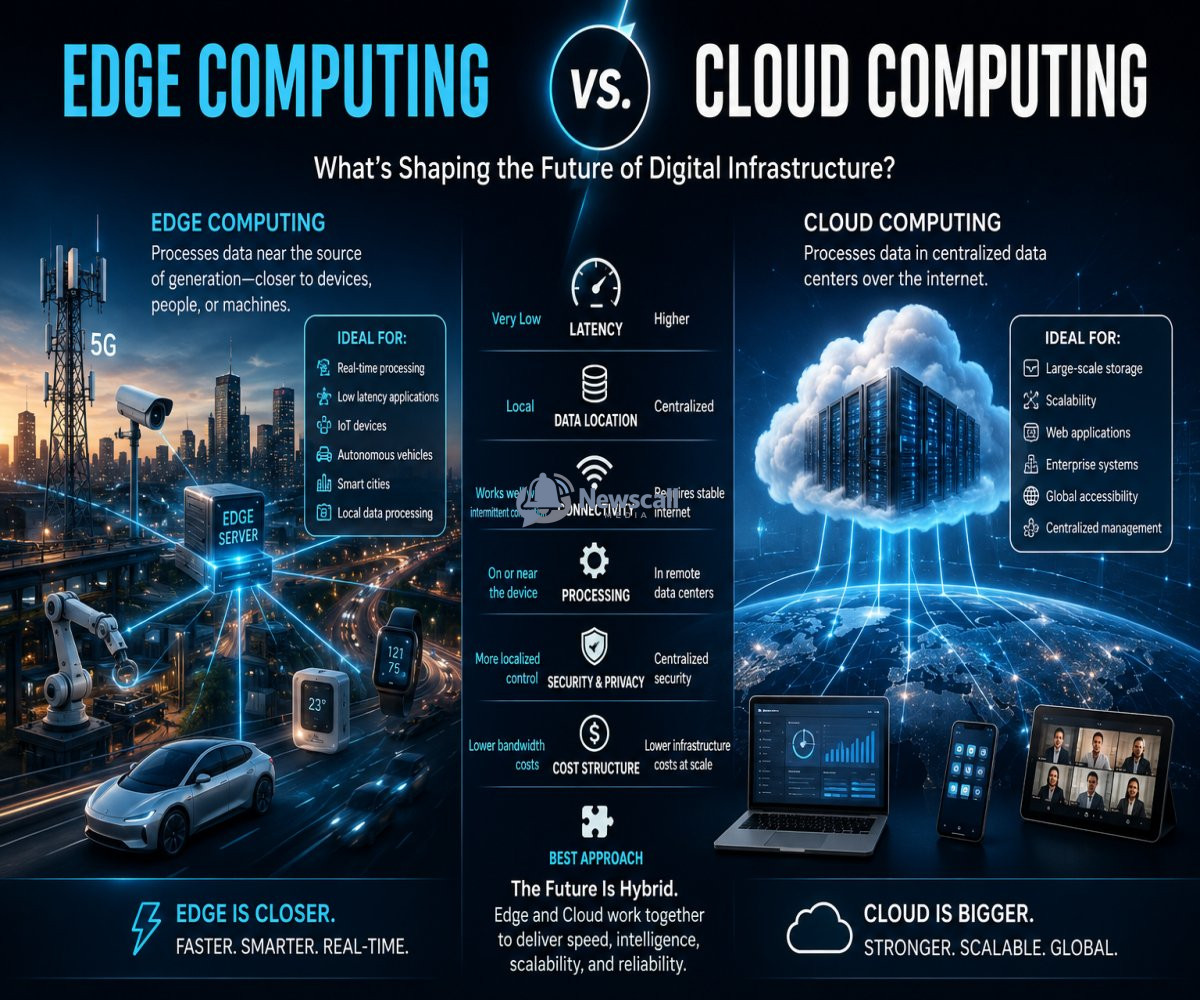
Cloud computing allows businesses and users to access computing power, storage, and software through large centralized data centers connected through the internet.
Instead of companies managing physical servers themselves, cloud providers handle the infrastructure remotely.
Major companies like Amazon Web Services, Microsoft Azure, and Google Cloud helped make cloud systems one of the foundations of modern software development.
Cloud computing became popular because it offers:
- scalability
- flexibility
- lower infrastructure costs
- global accessibility
- centralized data management
This model powers much of today’s internet economy.
---
What Is Edge Computing?
Edge computing works differently.
Instead of processing everything inside distant centralized data centers, edge computing moves some computing operations closer to where data is actually being generated.
This could include:
- smartphones
- smart factories
- vehicles
- IoT devices
- local servers
- telecommunications infrastructure
The goal is speed.
By reducing the distance data travels, edge systems can lower latency significantly and improve real-time performance.
---
Why Cloud Computing Became So Important
Cloud systems transformed technology because they allowed startups and businesses to scale rapidly without owning expensive physical infrastructure.
A small startup could suddenly launch global software products without building massive server rooms.
Cloud computing became ideal for:
- web applications
- enterprise software
- remote collaboration
- online storage
- large-scale platforms
- business systems
Its centralized structure also makes management and maintenance easier for many organizations.
---
Why Edge Computing Is Growing
As devices become smarter and more connected, speed is becoming more critical.
Some technologies cannot afford delays caused by sending data across long internet distances.
This is where edge computing becomes extremely valuable.
Edge systems are increasingly important for:
- autonomous vehicles
- smart cities
- industrial automation
- real-time security systems
- connected healthcare devices
- IoT infrastructure
In these environments, milliseconds matter.
Which One Is Better?
Neither technology is fully replacing the other.
Instead, many experts believe the future internet will rely on both working together.
Cloud computing remains stronger for:
- centralized systems
- large-scale storage
- scalable applications
- enterprise platforms
Edge computing becomes stronger when:
- low latency is critical
- real-time processing matters
- internet connectivity is unstable
- local processing improves performance
The future of digital infrastructure may increasingly depend on balancing both models efficiently.
---
A broader transformation is happening across the technology industry:
The internet is no longer built only around centralized systems.
As smart devices, connected infrastructure, automation, and real-time digital services expand globally, computing itself is slowly moving closer to the edge of the network.
And over the next decade, the relationship between cloud and edge computing may shape how the modern digital world operates.

Victor Oluebubechukwu Akuma.
Creative writer