

The Land of Landmarks
Hey 👋 reader,
Its been a while since I updated any travel content, so here I am today with another content that brings you to explore through words, though this one is quite unique, we'll be exploring a land in the African continent, in the Nigerian nation, somewhat fascinating, where laughter, food and beautiful people meet.
Dear readers I present to you, the beautiful land of Abeokuta in Ogun State.
Abeokuta, a city whose name literally translates to "under the rock".
The land mark of several significant historical events.
Dominated majorly by Yoruba and English speaking indigenes, with Christianity as it's major religion.
The official currency of Nigeria, even in Abeokuta, is the Nigerian naira, cards are also accepted, but if you wish to get around easily or purchase street foods, do well to exchange for wads of cash at the Bureau De Change or a notable commercial bank.
Abeokuta has recorded many great wars against several towns sorrounding them, some of which include, the Oyo empire oppression, the Owu war, the Ijaye war, and even clashes with the British colonial empire.
Though the Egba people suffered great losses, they always emerged victorious.
Okay, let me walk you through one of them, which will lead me to identify places for sightseeing.
The Rise of Abeokuta: Following the collapse of the Oyo Empire, the Egba scattered groups united and sought refuge under the protective granite outcrops of Olumo Rock. They established Abeokuta around 1830 and focused on building a lucrative palm oil trade rather than participating in the slave trade.
The Egba people have faced attacks from
The war between the Egba people ( indigenes of Abeokuta) and their neighboring rivals, the people of Dahomey, currently (Benin republic), the soldiers of the great King of Dahomey, King Gezo On March 3, 1851, his women( the agojies) who went to war and relinquished the heads of their enemies as their symbol of victory, they attacked the Egba people, invading their walls and crossing through the Ogun river.
Using their defensive positioning atop the rocks and recently acquired European firearms, the Egba repelled the attack, dealing a crushing defeat to the Dahomean army.
Seeking revenge for the 1851 defeat, King Gelele (Gezo's son) led a second major assault on Abeokuta on March 15, 1864. Despite fierce fighting from the Amazons, the Egba successfully defended the city, forcing Dahomey to retreat and officially ending their major incursions into Egba territory.
Abokuta is also home to the first ever news paper in Nigeria, called " Iwe-irohin" in 1859, by a missionary, Rev Henry Townsend.
It is also home to the first foreign house in Nigeria and the people of Abeokuta hold strong spiritual reverence to some of the amazing tourist attractions, such as the:
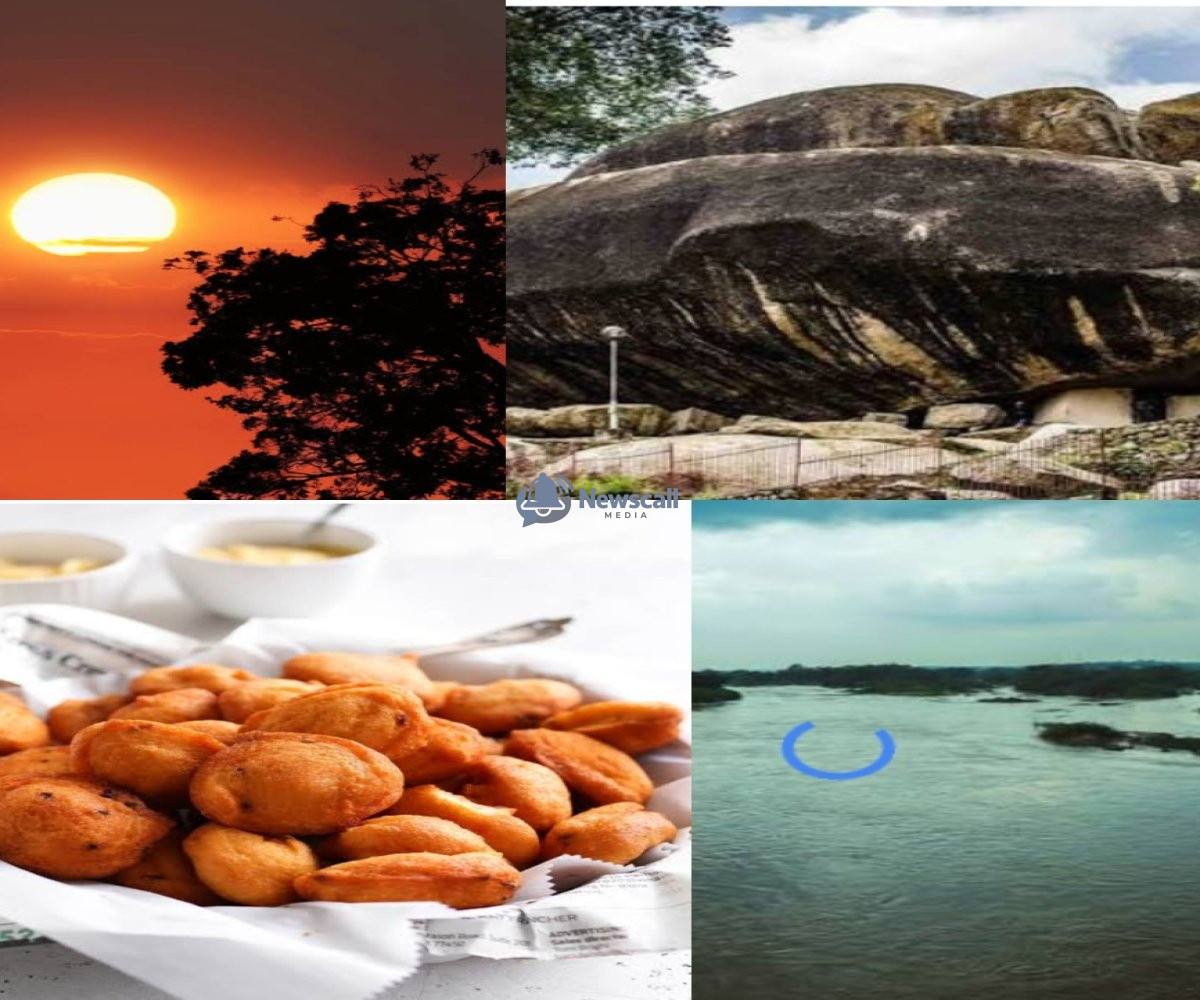
Olumo Rock:
The massive granite formation stands about 137 meters above sea level.
The word "Olumo" means "God molded this", or "God has ended the war".
Its patron spirit is venerated as an orisha in the Yoruba religion, and an annual festival is held where the traditional ruler, the Alake of Egbaland, performs rites at its sacred shrines.
Visitors can scale the landmark using over 200 hand-carved stone steps or ride a modern elevator to the top. The peak offers breath taking views of the city's iconic red roofs and ancient mud buildings.
The Ogun river :
The Ogun River is a major waterway that flows right past the base of Abeokuta, creating a scenic backdrop visible from the Olumo Rock.
The river originates in the isolated mountainous areas of Oyo State near Shaki, glides through Ogun State, and flows into the Lagos Lagoon.
Historically, the river was crucial for trade, commerce, and defense. Between 1830 and 1890, it served as the primary transport route for weaponry needed to defend Abeokuta.
The river holds it's name that it is named directly after Ogun State.
Centenary Hall:
Situated directly opposite the royal palace, this colonial-style edifice was constructed to mark 100 years of the Egba people's peaceful settlement in Abeokuta following 19th-century regional conflicts. It houses historical photographs and artifacts detailing the city's growth.
Alake Palace Ground:
Located in Ake, this is the official heritage residence of the Alake( ruler) of Egbaland, the paramount traditional ruler. The compound spans multiple generations of royal architecture, preserving original structural components alongside historic monuments like the first Bible brought to Nigeria by missionaries.
Having learnt Soo much about the amazing tourist attractions, let's also uncover savory dishes, and snacks you can try when you go visiting.
First on my list is the popular; Lafun and Abula.
While regular black Amala made from yam flour is popular across western Nigeria, Abeokuta is famous for Lafun, a white version made from fermented cassava flour. It is traditionally paired with Abula—a rich combination of Ewedu (jute leaves), Gbegiri (bean soup), and a spicy pepper stew. You can try legendary versions of this local staple at spots like 24 Hours Restaurant.
Next up, Ofada Rice and Sauce: Named after Ofada, a small town in Ogun State, this aromatic local rice is a premium delicacy. It is served in local leaves and drenched in a fiery, palm-oil-based stew cooked with locust beans (Iru) and assorted meats.
Efo Riro and Egusi: These deeply flavorful, spinach-based (Efo Riro) and melon seed-based (Egusi) soups are nice accompaniments for local swallows and are widely available in traditional restaurants.
Popular street food and snacks include, Roasted plantain and Roasted Groundnuts:
This combination of charcoal-roasted ripe plantain served alongside crunchy peanuts or a rich pepper sauce is a favorite street side comfort food across town.
Akara and Puff-Puff: Freshly fried, crispy bean cakes (Akara) and sweet dough balls (Puff-Puff) are readily available from morning and evening street vendors.
Suya: Succulent, spicy grilled meat skewers coated in a distinct peanut-based spice blend (Yaji) light up the city's nightlife hubs.
While visiting these street joints, you'd obviously not want to look so foreign, you can work your blending-in by learning simple Yoruba phrases that can greatly enhance your travel experience in Abeokuta.
Some of which include:
Ẹ káàárọ̀ - Good morning,
Ẹ káàsán -Good afternoon,
Ẹ káalẹ́ - Good evening,
Ẹ n lẹ - hello
Bawo ni? - How are you?
Ẹ ṣẹ - Thank you
Ẹ jọ̀wọ́ - Please / Excuse me
Bẹ́ẹ̀ ni - Yes
Rára- No.
Ó dábọ̀ - Goodbye
These phrases would come in handy when you find yourself outside your vacation residence.
Speaking of phrases, the Yoruba local etiquette places immense value on respect and warm greetings
Everyday greetings are very essential.
The Nigerian weather in General is usually warm, so when packing do well to pack up decent and airy clothes,
gowns and skirts, with shorts for hiking or evening walks.
For the guys, nicely tailored pants and Kaftan.
To properly blend in you can purchase Adire fabrics ( a colourful tye& dye material) made in the fabric markets for both genders.
Sunscreen and Sunshades too very essential.
While speaking about acceptable behaviours also beware of pickpockets, avoid leaving your valuables open or keeping them carelessly, avoid overly crowded places and avoid staying out late at night.
Nigeria in general is a beautiful nation, and the city we explored today, Abeokuta, still more wonderful, do have a pleasant stay.
Ó dábọ̀ oh !!!!!

Priscilla Uzobuenyi
Hey 👋 Feeling stuck trying to build your character, or just keep up with life without feeling overwhelmed? Maybe you...