

Budget 2026: Government Agencies Allocate N400 Billion for Mosques, Palaces, and Community Halls.
Billions Set Aside for Non-Essential Projects While Critical Sectors Remain Underfunded
A Punch investigation has revealed that approximately 78 federal ministries, departments, and agencies (MDAs) have earmarked nearly N400 billion in the 2026 budget for projects that many consider peripheral to Nigeria's developmental needs.
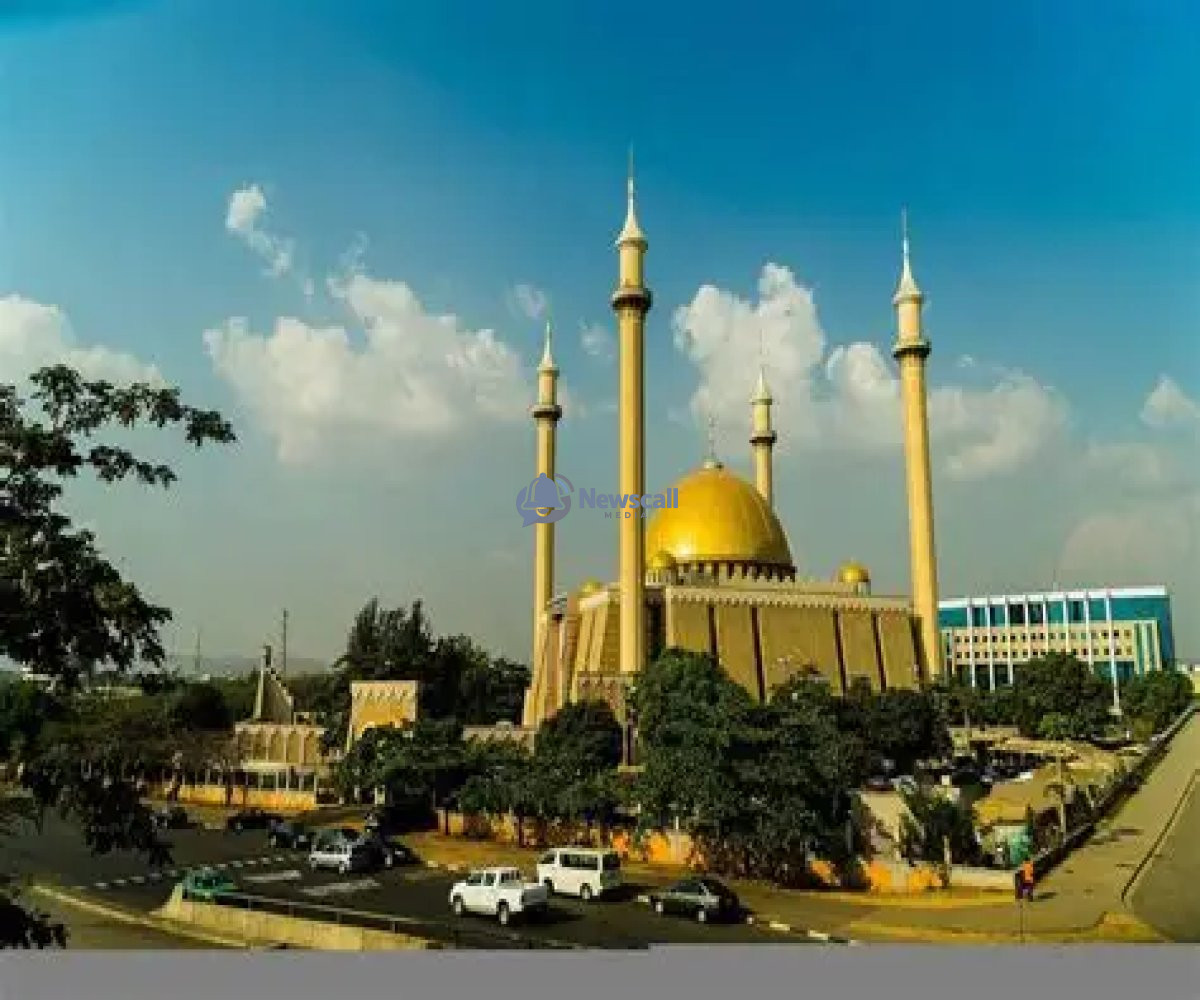
The allocated funds are intended for constructing and renovating community halls, mosques, traditional rulers' palaces, village market squares, and civic centres across the country.
But that's not all. More than half of this sum is tagged for other non-core projects including grain supply, motorcycle distribution, sponsorship of community thrift societies, museum construction, mini-stadiums, and tricycles (popularly known as "Keke Marwa").
Questionable Projects Raise Eyebrows:
Some of the items in the budget appear particularly disconnected from the core mandates of the agencies that proposed them.
Take the National Building and Road Research Institute in Lagos, for instance. Their budget includes:
· Village hall construction in Akukwa, Anambra State
· An international market in Birniwa, Jigawa State
· Traditional rulers' palaces in Rivers State
· Palace refurbishment for the Agbana of Isanlu in Kogi State
· Remodelling of five mosques across Kebbi, Ekiti, and Jigawa states
These items alone cost over N4 billion.
Similarly, the National Productivity Centre's budget includes funding for Ijaw musicians, an Emir's palace in Yobe State, an econometrics laboratory in Ekiti State, Obas' palaces in Ogun State, and an abattoir in Gombe State.
Perhaps most strangely, the National Mathematical Centre Nigeria's premier institution for mathematical research has budgeted for constructing a Sociology Department building at Ahmadu Bello University, Zaria. This clearly falls outside their statutory responsibilities.
Experts Sound the Alarm:
Economist and former central banker Chukwunonso Ihuma blames the National Assembly for this state of affairs.
"All these are down to poor oversight by the National Assembly. In most cases, they are even the ones inserting, smuggling, and padding these budgets," he said.
He explained that lawmakers often take advantage of the budget process to insert projects with minimal developmental impact.
"This explains why we have to go back to zero budgeting. We have to start from scratch. The Director-General of the Budget Office of the Federation should have the power to discard any item that has no relevance to Nigerians," Ihuma argued.
He pointed out that markets, palaces, and civic centres are traditionally the responsibility of state and local governments, not federal agencies.
Opportunity Cost Concerns:
Dr. Muda Yusuf, CEO of the Centre for the Promotion of Private Enterprise, highlighted broader fiscal challenges.
"The stoppage of Ways and Means has created a big hole for the current government," he noted, referring to the practice of the government borrowing from the central bank.
He warned that unrealistic budget projections including an assumed oil price of $75 per barrel and production of 1.84 million barrels daily could further strain the nation's finances.
Umar Sani, a media strategist and former adviser to Vice President Umar Sambo, offered a different perspective. He recalled that previous administrations, including those of Presidents Buhari and Jonathan, occasionally rejected budgets containing such questionable items.
Implementation Challenges Persist:
The revelations come as Nigeria continues implementing the 2025 budget seven months into 2026. The Senate recently approved a three month extension for capital projects implementation, moving the deadline from June 30 to September 30, 2026.
Analysts argue that the fragmented nature of these projects weakens fiscal discipline and diverts resources from critical sectors including healthcare, education, security, roads, and power infrastructure that could deliver broader, more lasting economic impact.
Looking Forward:
With President Bola Tinubu having already assented to the 2026 Appropriation Bill in April, the question remains whether these controversial allocations will actually be implemented, or whether executive discretion will see them shelved in favour of more pressing national priorities.

Umeanozie Prosper
Writer, Novelist,blogger, content creator