

Why Election Boycotts Rarely Deliver Political Change: Lessons from Nigeria's 1964 Crisis
Why Election Boycotts Rarely Deliver Political Change: Lessons from Nigeria's 1964 Crisis
Election boycotts have long been used by opposition parties as a form of political protest, but history suggests they often achieve the opposite of their intended goal. Looking back at Nigeria's turbulent 1964 federal election, one of the country's most contentious political contests, the events demonstrate how refusing to participate in an election can weaken the opposition while doing little to change the outcome.
The crisis surrounding the 1964 election remains a significant chapter in Nigeria's democratic history, offering important lessons for today's political actors as debates over election participation continue.
The 1964 federal election was marked by intense rivalry between two major political coalitions. The Nigerian National Alliance (NNA), led by the Northern People's Congress (NPC), faced the United Progressive Grand Alliance (UPGA), an alliance of the National Council of Nigerian Citizens (NCNC) and the Action Group (AG).
Political tensions escalated before the election after dozens of candidates were declared elected unopposed, particularly in the Northern Region. UPGA leaders alleged that many of their candidates were prevented from submitting valid nomination papers, describing the electoral process as unfair and deeply flawed.
On December 22, 1964, the Chairman of the Federal Electoral Commission, E. E. Esua, publicly acknowledged irregularities, admitting that there were constituencies where more than one candidate had been validly nominated despite announcements that some candidates had been returned unopposed. His statement further heightened public concerns over the credibility of the electoral process.
As disagreements intensified, UPGA threatened to boycott the election. The political crisis deepened with the resignation of two members of the Federal Electoral Commission, while calls grew for then-President Nnamdi Azikiwe to intervene.
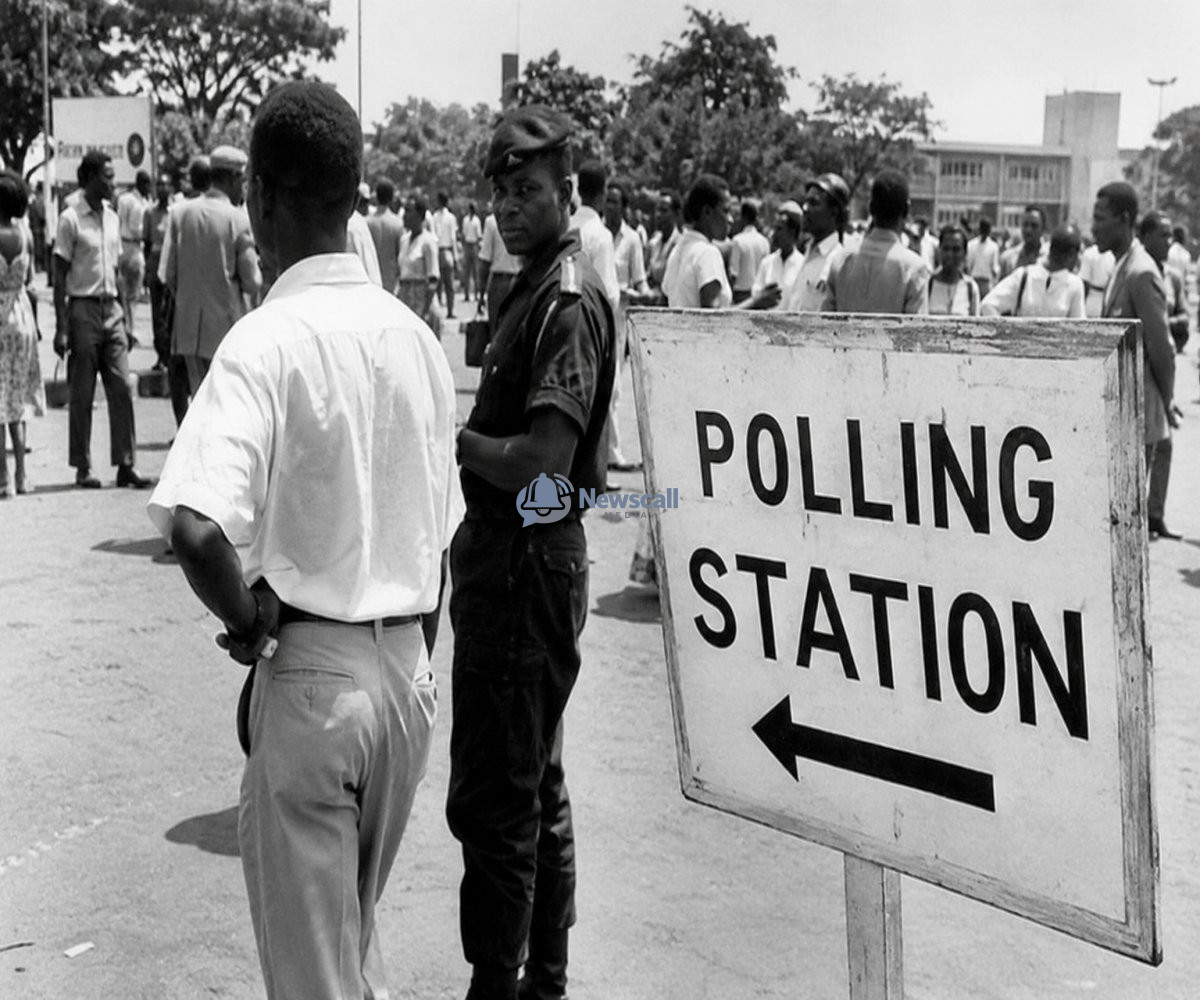
When voting eventually took place on December 30, 1964, participation varied widely across the country. Voting was reported to be strong in much of Northern Nigeria, moderate in parts of the West despite isolated violence, extremely limited in Lagos, and virtually absent in the Eastern Region, where the opposition boycott was widely observed.
UPGA subsequently rejected the election outcome and urged President Azikiwe to convene a national conference to resolve the political impasse peacefully.
Faced with a rapidly deteriorating situation, President Azikiwe initially considered withholding his constitutional authority to invite a Prime Minister to form a government, warning that doing so based solely on the disputed election results could deepen national divisions. He also expressed concerns that the political crisis threatened Nigeria's unity and democratic future.
After extensive consultations, however, the President concluded that the Constitution left him with no alternative but to invite the incumbent Prime Minister, Abubakar Tafawa Balewa, to form a broadly based national government. He also called for outstanding elections to be completed, disputed results in affected areas to be reviewed, and reforms to Nigeria's electoral system.
In the weeks that followed, several opposition figures softened their positions. The NCNC eventually agreed to give the new government what it described as "a fair trial," while the Action Group also stepped back from further confrontation. Some opposition members later joined the federal government, helping to ease immediate political tensions.
The events surrounding the 1964 election are widely regarded by historians as one of the major political crises that exposed weaknesses in Nigeria's young democracy before the military coup of January 1966.
The episode also illustrates a recurring dilemma in democratic politics. While election boycotts may draw attention to perceived injustice, they often leave the political field open to opponents and reduce the opposition's influence within constitutional institutions. Many political analysts argue that participation, alongside legal challenges and electoral reforms, generally offers a stronger path for democratic engagement than complete withdrawal from the electoral process.
The historical experience of 1964 continues to be referenced whenever opposition parties consider staying away from elections in protest.
Nigeria's 1964 election remains a powerful reminder of the consequences of political polarization and disputed electoral processes. Although the opposition's boycott highlighted concerns over fairness, it ultimately failed to prevent the formation of a new government and reduced the opposition's direct role in shaping political outcomes.
The central lesson from that period is that while electoral grievances deserve attention and reform, democratic participation often provides greater opportunities for influence than political abstention. Strengthening electoral institutions, promoting transparency, and resolving disputes through constitutional means remain essential for preserving public confidence in Nigeria's democracy.

Nwekwe Esther Amarachukwu
Public speaker,Research-driven writer covering politics and public affairs, committed to accuracy, and meaningful public discourse.