

Trump Faces Backlash Over Controversial Makeover of Washington Landmarks
Trump Faces Backlash Over Controversial Makeover of Washington Landmarks
United States President Donald Trump is facing growing criticism after intensifying efforts to reshape major public spaces and historic landmarks across Washington, D.C., with opponents accusing him of treating federal parks and monuments like personal renovation projects.
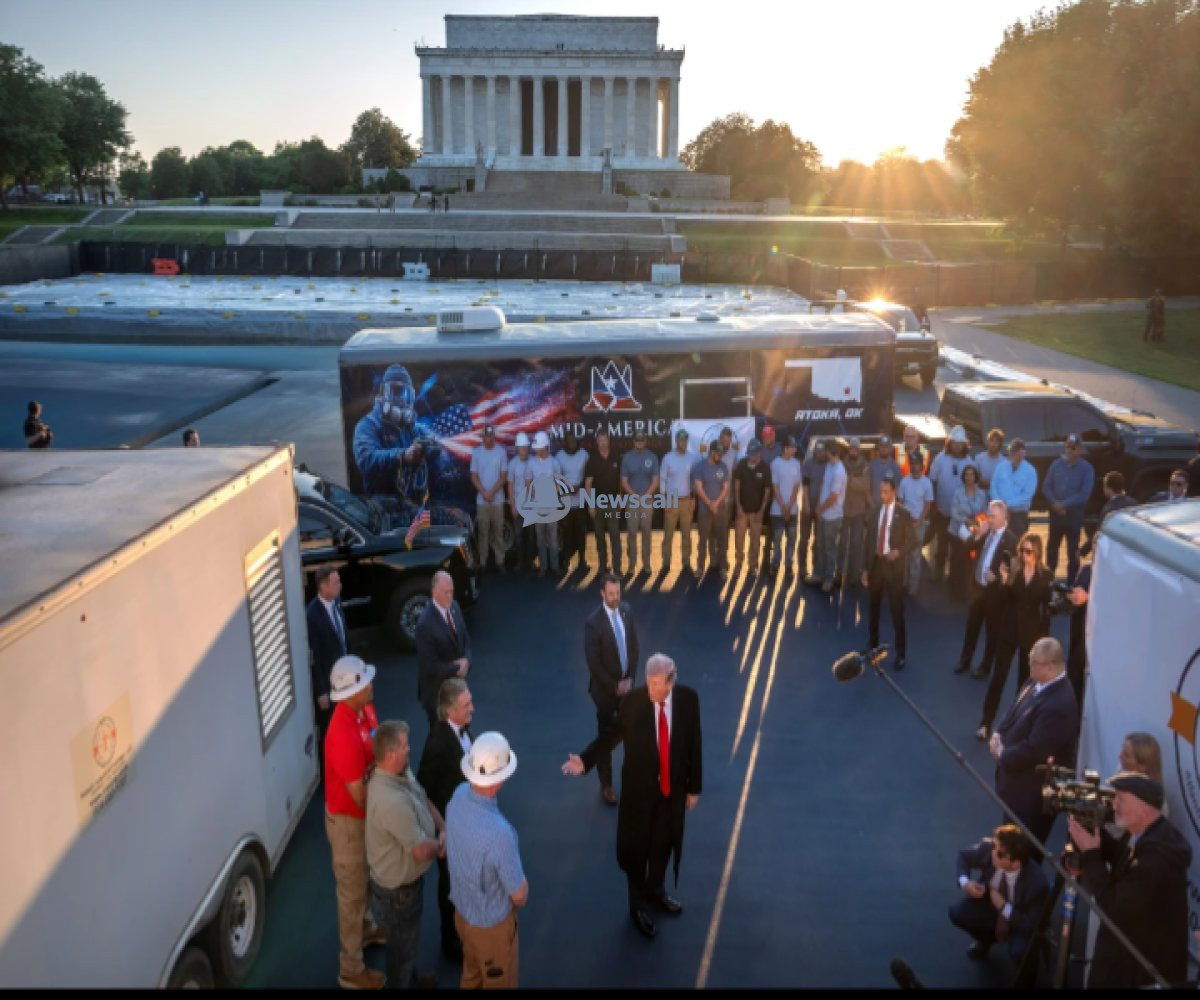
The latest controversy centers on Trump’s decision to repaint the iconic Reflecting Pool near the Lincoln Memorial in what he described as “American flag blue,” a move that has triggered public debate, legal scrutiny, and renewed concerns about presidential control over national public spaces.
The project became one of the administration’s most talked-about initiatives this week after Trump personally visited the National Mall to inspect the renovation shortly after tensions escalated between the United States and Iran.
During a recent speech to small-business owners, Trump spent several minutes defending the project and praising the redesign. He claimed he drastically reduced the renovation cost from an alleged estimate of $350 million to about $1.9 million, while also discussing details of the pool’s granite flooring and construction process.
Images of workers coating the historic Reflecting Pool with a blue surface quickly spread online, generating strong reactions from preservationists, architects, historians, and political critics.
However, the Reflecting Pool renovation is only part of a broader transformation effort now unfolding in Washington.
Attention has also shifted to East Potomac Park, a popular public recreational area that includes a long-standing municipal golf course with views of the Washington Monument. Trump has reportedly expressed interest in converting the course into what he described as a “U.S. Open-caliber” golf destination.
The proposal immediately triggered resistance from preservation advocates and community groups who fear the redevelopment could alter the accessibility and historic character of one of the city’s most affordable public golf facilities.
Concerns intensified further after debris from the demolition of the White House East Wing was reportedly dumped at the site and later tested positive for lead contamination. Environmental and preservation groups responded by filing legal challenges against the federal government, arguing that public health and historical preservation standards may have been violated.
The dispute soon reached federal court, where a judge reviewing the future of the park clarified that she had no intention of personally managing public recreation projects, indirectly mocking the increasingly unusual level of presidential involvement in local park decisions.
Despite the controversy, the nonprofit currently operating the golf course announced that it would continue managing the facility until the National Park Service officially begins what authorities are calling a “historic restoration” of the area.
The growing focus on aesthetics, architecture, and public-space redesign has become a defining feature of Trump’s second-term presidency. Critics argue the administration is prioritizing grand visual projects and symbolic renovations at a time when Americans remain concerned about inflation, economic pressure, healthcare costs, and foreign policy tensions.
Some political observers have even compared Trump’s approach to leaders known for extravagant displays of power and image-driven governance, pointing to his repeated emphasis on gold decor, monumental redesigns, and large-scale construction ambitions around federal properties.
Supporters, however, defend the projects as efforts to restore national pride, beautify neglected spaces, and modernize historic American landmarks ahead of upcoming national celebrations, including preparations linked to America’s 250th anniversary.
The administration has consistently argued that many public sites in Washington have suffered years of neglect and require ambitious restoration efforts rather than minimal maintenance.
Still, legal disputes surrounding several of the projects continue to grow.
A federal judge recently halted plans linked to a proposed White House ballroom construction project, while preservation groups are increasingly demanding transparency over environmental safety, federal spending, and the long-term impact of altering nationally protected spaces.
The broader political debate now goes beyond architecture or landscaping. For many critics, the issue reflects concerns about presidential authority, federal oversight, and the extent to which public landmarks should reflect the personal vision of a sitting president.
As legal battles continue and restoration projects expand across Washington, Trump’s aggressive remaking of America’s most symbolic public spaces is quickly becoming one of the most controversial cultural and political stories of his presidency.

Nwekwe Esther Amarachukwu
Public speaker,Research-driven writer covering politics and public affairs, committed to accuracy, and meaningful public discourse.