The Billion-Dollar Industry Hidden Inside Waste
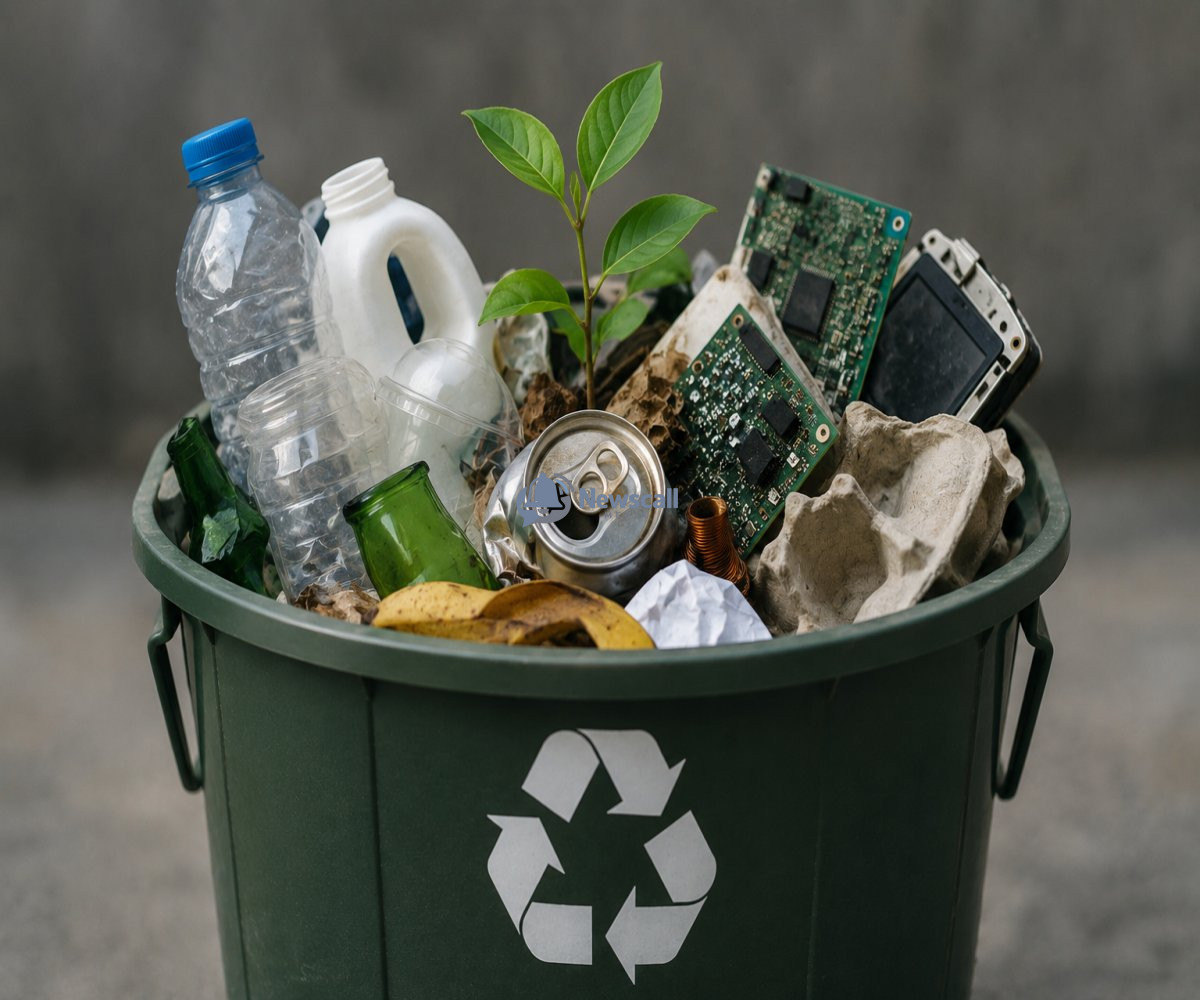
When most people look at a pile of trash, they see the end of a product’s life.
A discarded plastic bottle.
An old smartphone.
Food scraps.
Broken furniture.
To many, these are simply items to be thrown away.
But to a growing number of entrepreneurs, investors, and engineers, waste is not the end of a product’s journey.
It is the beginning of an entirely new industry.
Across the world, startups are discovering that some of the most valuable resources on Earth are not buried underground or harvested from forests. They are already sitting in landfills, recycling centers, factories, and even our homes.
What was once considered useless is rapidly becoming one of the most promising frontiers in innovation.
This shift is part of a broader movement known as the circular economy—an economic model designed to keep materials in use for as long as possible rather than following the traditional “make, use, dispose” approach. Instead of continually extracting new raw materials, companies are finding ways to recover, rebuild, and repurpose what already exists.
This transition is creating entirely new businesses.
Take electronic waste, for example.
Every year, the world discards tens of millions of tonnes of old electronics, including smartphones, laptops, televisions, and household appliances. Hidden within these devices are valuable materials such as gold, silver, copper, cobalt, lithium, and rare earth elements.
Mining these materials from the ground is expensive, energy-intensive, and often environmentally damaging.
Recovering them from discarded electronics can, in many cases, be more efficient.
As demand for batteries, electric vehicles, and renewable energy technologies continues to grow, companies specializing in urban mining—the process of extracting valuable materials from electronic waste—are becoming increasingly important.
Plastic waste is undergoing a similar transformation.
For decades, recycling plastics posed significant challenges because many materials degraded after repeated use or were too costly to process.
Today, startups are developing advanced recycling technologies capable of breaking plastics down into their original chemical building blocks. These materials can then be used to produce high-quality plastics again, reducing dependence on new fossil fuels.
Some companies are even converting plastic waste into construction materials, durable furniture, road surfaces, and industrial products.
Food waste, another global challenge, is also becoming an unexpected business opportunity.
Millions of tonnes of edible food are lost every year across supply chains, supermarkets, restaurants, and households.
Instead of allowing this waste to decompose in landfills, innovative companies are transforming it into animal feed, organic fertilizers, renewable energy through biogas production, and even new food ingredients.
What was once an environmental problem is increasingly becoming an economic resource.
Construction is another industry undergoing this transformation.
Demolished buildings generate enormous amounts of concrete, steel, bricks, and timber.
Historically, much of this material ended up in landfills.
Today, engineers are finding ways to recover and process these materials for use in new buildings, reducing both construction costs and carbon emissions.
Even wastewater is being reimagined.
Advanced treatment facilities can now recover clean water, nutrients for agriculture, and valuable minerals from wastewater streams that were previously discarded.
Some researchers are even exploring methods to extract critical resources such as phosphorus—a mineral essential for global food production—from sewage systems.
These innovations highlight a fundamental shift in thinking.
For centuries, economic growth depended largely on extracting more natural resources.
Modern innovators are asking a different question:
What if the resources we need are already above ground?
The environmental benefits are significant.
Recovering existing materials often requires less energy than producing them from raw resources.
It reduces landfill use, lowers greenhouse gas emissions, and decreases pressure on mining operations and natural ecosystems.
But sustainability is not the only reason investors are paying attention.
The economics are becoming increasingly attractive.
As populations grow and demand for critical materials continues to rise, raw resources are becoming more expensive and, in some cases, more difficult to secure.
Businesses that can recover valuable materials efficiently are positioning themselves in markets expected to expand dramatically over the coming decades.
Governments are taking notice as well.
Many countries are introducing regulations that encourage recycling, require manufacturers to recover products at the end of their life, and promote circular manufacturing practices.
These policies are creating additional opportunities for startups capable of developing innovative waste recovery technologies.
The next generation of billion-dollar companies may not emerge from discovering entirely new resources.
They may emerge from changing the way we see the ones we have been throwing away all along.
History has shown that innovation often begins with a shift in perspective.
Oil was once considered little more than an inconvenient substance that seeped from the ground.
Data was once viewed as a by-product of business operations.
Today, both are among the world’s most valuable assets.
Waste may be following the same path.
The greatest resource of the future might not be hidden beneath mountains or deep beneath the ocean.
It might already be sitting in yesterday’s trash, waiting for someone innovative enough to recognize its true value.

Victor Oluebubechukwu Akuma.
Creative writer