


8 Engineering Mistakes That Ended Up Saving Millions of Lives
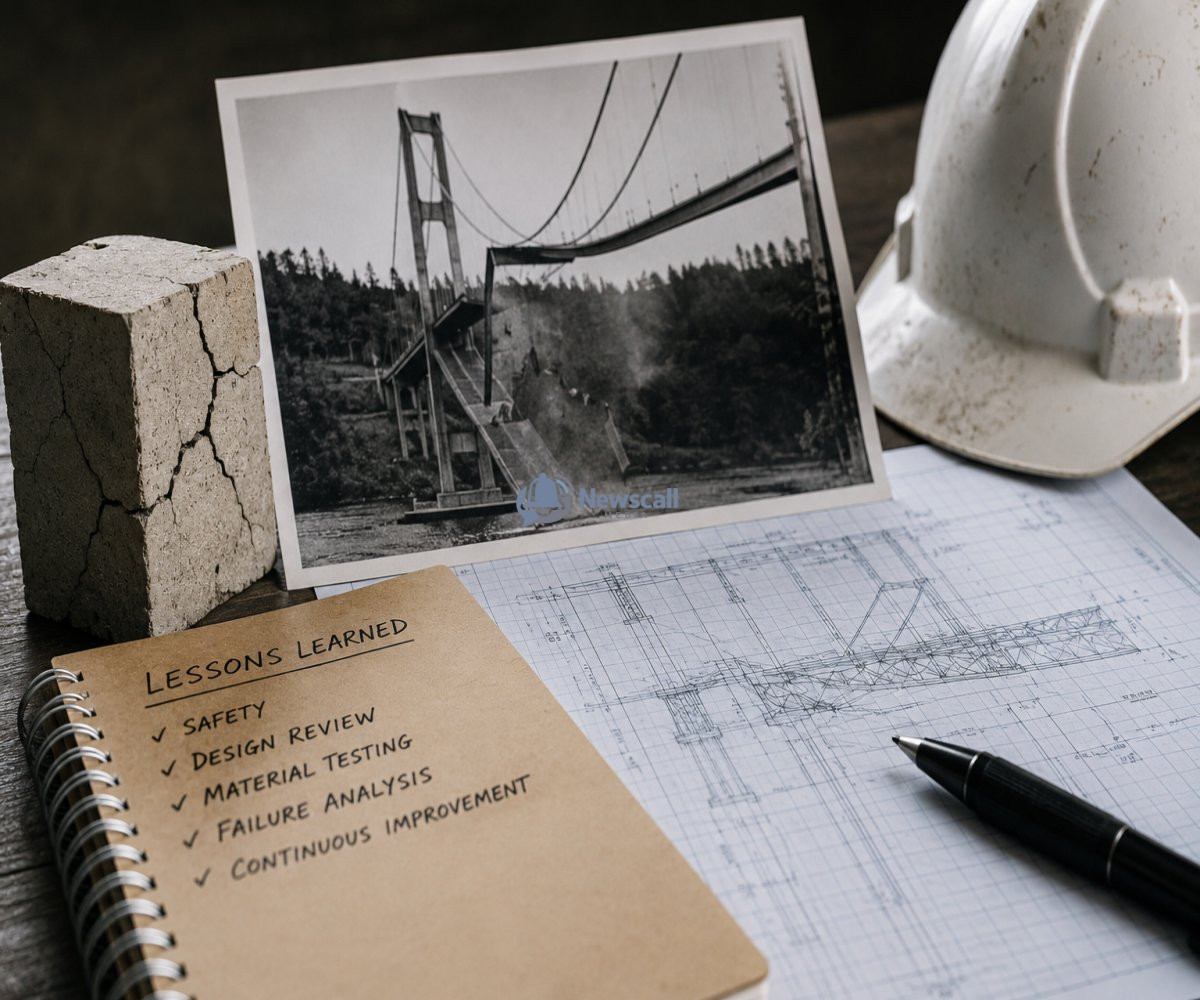
Engineering is often associated with precision.
Blueprints are carefully reviewed. Simulations are run repeatedly. Every bolt, beam, and circuit is designed to perform exactly as intended. The goal is simple: eliminate mistakes before they happen.
Yet history tells a more complicated story.
Some of the most important advances in engineering were born not from flawless designs, but from failures that exposed dangerous weaknesses. Bridges collapsed, aircraft malfunctioned, buildings cracked, and machines broke in ways no one expected.
These incidents were costly, and in many cases, tragic.
But they also forced engineers to rethink old assumptions, rewrite safety standards, and invent technologies that have since protected millions of people around the world.
In engineering, mistakes are rarely celebrated. However, when they are studied instead of ignored, they often become the foundation of safer designs and better systems.
Here are eight engineering mistakes that changed history for the better.
1. The Tacoma Narrows Bridge Collapse
When the Tacoma Narrows Bridge opened in Washington State in 1940, it was considered a modern engineering achievement.
Just four months later, strong winds caused the bridge to twist violently before collapsing into the river below.
Fortunately, no human lives were lost, but the dramatic failure stunned engineers worldwide.
The collapse revealed that wind could produce powerful aerodynamic forces that had been underestimated in bridge design. Since then, engineers have extensively tested bridges in wind tunnels before construction, and modern suspension bridges are designed with aerodynamics in mind.
Every major bridge built today benefits from lessons learned from that single collapse.
2. The Comet Jet Airliner Disaster
Britain's De Havilland Comet was the world's first commercial jet airliner.
It promised faster, smoother travel and represented a major leap in aviation.
However, several aircraft unexpectedly broke apart during flight in the 1950s.
After an extensive investigation, engineers discovered that repeated pressurization cycles caused tiny cracks to form around the aircraft's square windows.
Over time, those cracks grew until the structure failed.
The solution transformed aircraft design forever.
Modern airplanes use rounded windows, stronger materials, and rigorous fatigue testing to prevent similar failures.
Millions of airline passengers have flown more safely because of those painful lessons.
3. The Hyatt Regency Walkway Collapse
In 1981, suspended walkways inside the Hyatt Regency Hotel in Kansas City collapsed during a crowded event.
The disaster claimed 114 lives and remains one of the deadliest structural failures in American history.
Investigators found that seemingly small design changes during construction had doubled the load placed on key support rods.
The tragedy reshaped structural engineering practices.
Today, design modifications undergo far stricter reviews, and communication between engineers, contractors, and manufacturers has become far more rigorous.
4. Challenger Changed Spaceflight Safety
In 1986, the Space Shuttle Challenger broke apart shortly after launch.
The investigation traced the disaster to O-ring seals that became brittle in unusually cold weather.
Beyond the technical failure, investigators also found communication problems within the decision-making process.
The tragedy led NASA to redesign critical components, strengthen safety procedures, and place greater emphasis on listening to engineering concerns before launches.
It became a reminder that engineering is as much about organizational decisions as technical calculations
.
5. Chernobyl Changed Nuclear Engineering
The 1986 Chernobyl disaster remains one of history's worst nuclear accidents.
While multiple human and procedural errors contributed, the event exposed weaknesses in reactor design and safety culture.
In the decades since, nuclear plants around the world have introduced stronger containment systems, improved emergency shutdown mechanisms, and far stricter international safety standards.
Modern reactors are fundamentally safer because engineers studied what went wrong.
6. The Space Shuttle Columbia Investigation
When Space Shuttle Columbia disintegrated during re-entry in 2003, investigators discovered that foam insulation striking the wing during launch had created damage that ultimately proved fatal.
The accident led to major improvements in inspection procedures, imaging technologies, and launch safety protocols.
It also highlighted the importance of encouraging engineers to raise concerns without fear of being ignored.
Today, safety reviews across many industries have adopted similar principles.
7. The Leaning Tower of Pisa
Unlike the other examples, the Leaning Tower of Pisa didn't collapse.
Instead, it became one of history's most famous engineering mistakes.
The tower began leaning during construction because its shallow foundation rested on unstable soil.
Centuries later, engineers developed sophisticated stabilization techniques that prevented it from falling while preserving its historic character.
The project advanced knowledge in soil mechanics and foundation engineering, helping engineers better understand how structures interact with the ground beneath them.
8. Early Automobile Designs
The first automobiles lacked many safety features we now take for granted.
There were no seat belts.
No crumple zones.
No airbags.
No anti-lock braking systems.
As road accidents increased, engineers carefully studied crashes to understand how vehicles failed and how occupants were injured.
Those studies transformed automotive engineering.
Today's vehicles are designed not merely to avoid accidents but to protect passengers when accidents occur.
Features that now save countless lives every year were developed because engineers learned from earlier mistakes.
Engineering has never been about achieving perfection on the first attempt.
Its true strength lies in learning.
Every failed bridge, damaged aircraft, collapsed structure, and flawed machine leaves behind valuable knowledge that shapes future designs.
While no engineer hopes to witness failure, history shows that the willingness to investigate mistakes honestly has driven some of humanity's greatest safety improvements.
The safest technologies in the modern world were not created because nothing ever went wrong.
They exist because engineers refused to let failure be wasted.

Victor Oluebubechukwu Akuma.
Creative writer