

Rivers 2027: Wike, Fubara, Cole in Three-Way Tussle for Control as APC Faces Fresh Crack.
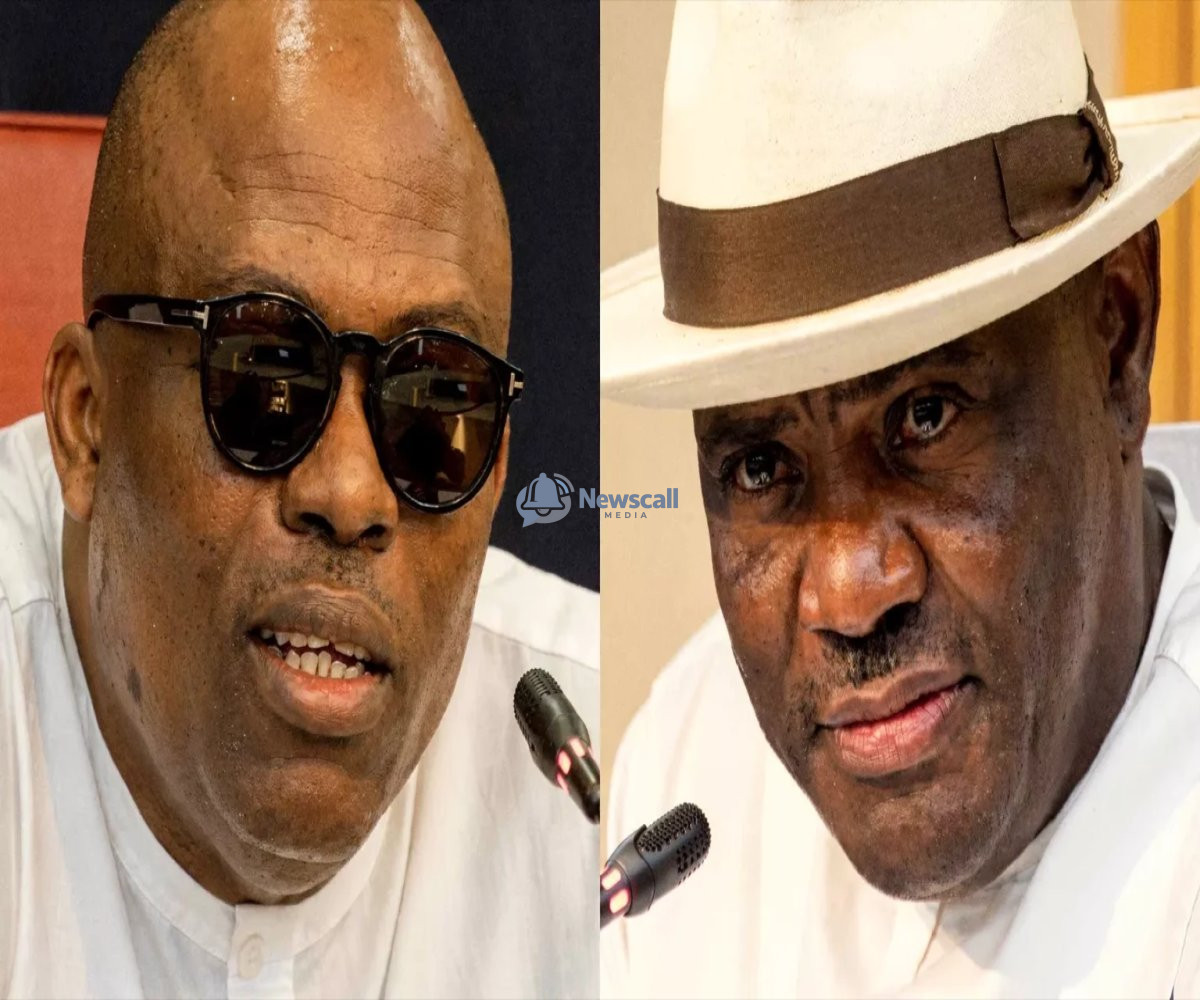
Something is brewing in Rivers State politics, and it's getting delicate by the day.
Governor Siminalayi Fubara is quietly racking up goodwill from the Presidency. The FCT Minister, Nyesom Wike, isn't going anywhere—his political muscle remains formidable. And Tonye Cole? He's dusting himself off, trying to stay relevant. Add competing ambitions, shifting alliances, factional loyalties, and intense calculations ahead of 2027, and you've got a political pot about to boil over.
Right now, the All Progressives Congress (APC) in Rivers is split into three major camps. First, there's Wike's camp. Second, the emerging structure backing Governor Fubara. Third, the old APC bloc tied to Tonye Cole and loyalists of former Transportation Minister, Rotimi Amaechi.
But here's the thing—the APC in Rivers has never quite healed from its past. The long, bitter rivalry between Amaechi and Magnus Abe left deep scars. Those wounds haven't disappeared. They've just morphed into new alignments, driven by survival and shifting interests. Some of Amaechi's loyalists have even followed him into the African Democratic Congress (ADC).
The ongoing rift between Wike and Fubara has only made things messier. What's unfolding isn't just a governorship race anymore. It's a full-blown struggle over who will control Rivers State's political direction.
Three Men, Three Ambitions
So far, three figures have openly declared interest in the 2027 governorship race: Fubara, Cole, and George Kelly—one of Wike's allies. Each represents a different political tendency.
Fubara has the advantage of incumbency. He's got growing grassroots support and public sympathy from his drawn-out confrontation with Wike. His calm, people-oriented style gives him a softer image in a state used to aggressive power politics. His profile got a boost after the October 2024 local government elections (even though the Supreme Court later nullified them). His defection from the PDP to the APC, plus signals from the Presidency that governors should control party structures in their states, has people thinking he might get stronger institutional backing. Some of his loyalists—Chijioke Ihunmo and former Chief of Staff Edison Ehie—have reportedly picked up nomination forms for legislative positions. His camp is preparing.
But he'll face resistance. Powerful APC blocs loyal to Amaechi and the old guard won't just hand over the party structure to Fubara.
Wike still holds enormous leverage. Beyond his federal influence, he commands grassroots networks and local political machinery across the state. His control over local government structures? Massive. During the State of Emergency, his camp installed the current 23 local government chairmen, who remain loyal to him. That structure will be key for delegate mobilization.
Wike has made his stance clear. During a recent media chat in Abuja, he bluntly said his camp won't support Fubara's re-election. In January, during a thank-you tour across local governments, he accused Fubara of breaking agreements from reconciliation efforts and insisted his camp still controls the political structures. Wike's allies claim one of the peace deal conditions was that Fubara wouldn't seek re-election in 2027. Wike also said he hasn't endorsed anyone yet—that will come after wider consultations.
Tonye Cole brings a different flavor. He's a longtime APC loyalist with technocratic appeal and strong Amaechi connections. He represents the old APC bloc trying to stay relevant. While he doesn't have the grassroots reach of Wike or Fubara, he has support among professionals, the middle class, and business communities who like his message on governance reforms.
George Kelly, seen as aligned with Wike, represents continuity of Wike's influence, especially in the riverine axis. He's strategically relevant in succession calculations.
Why Consensus Will Be Hard
Let's be honest—this isn't just about who buys nomination forms. It's a proxy battle among entrenched political networks. Talk of a consensus candidate? Almost impossible. Amaechi's endorsement of Cole still hangs in the air.
Three scenarios are possible:
1. Direct primaries – This could deepen internal competition and leave the party nursing post-primary wounds.
2. A managed consensus from Abuja – Designed to prevent fragmentation before the general election.
3. Internal fragmentation – The worst case. Unresolved grievances weaken party cohesion and open fresh cracks.
What Really Shapes Rivers Elections
Beyond incumbency, a few things always matter in Rivers:
· Control of political structures – Who controls party machinery, local government structures, ward networks, and grassroots mobilization. That determines delegate strength, campaign coordination, and election-day turnout.
· Godfatherism – Conflicts between incumbents and former benefactors have shaped Rivers politics for years. But this Wike-Fubara struggle might break tradition, especially after Wike said he won't repeat what he calls his "mistake" of 2023.
· Judicial intervention and security – Rivers has seen endless disputes over parallel executives and court rulings that reshape outcomes. Elections here have also been marked by security tensions, intimidation, and violent clashes.
What Stakeholders Are Saying
Obinna Wordi, a political science lecturer at the University of Port Harcourt, says the struggle is fundamentally about power and control ahead of 2027. He says the APC remains divided into three blocs, and the contest is still wide open.
"The game is still open because direct primaries will involve a lot of logistics," he said.
He warned against a consensus arrangement that could deepen divisions: "The party should be careful not to choose a consensus candidate that will create sharp divisions within the APC."
Wordi also pointed to confusing signals from the center. "We've heard the Presidency say governors should control party structures. But the President has also acknowledged the FCT minister as the political head of the Rainbow Coalition in Rivers. So the governor automatically controlling the structure may not fully apply here."
He added: "Whether you like it or not, Fubara is the sitting governor. He has his structure, his foot soldiers, and incumbency resources. Then you have the Cole factor. He's gained visibility from contesting before."
Wordi believes the Presidency may ultimately decide this. "If you go by consensus, Wike may have the advantage. If you go by direct primaries, his camp still has strong grassroots influence through local government structures."
Ogbonna Nwuke, a former House of Representatives member, is more optimistic. He thinks major interests could still reach a consensus.
"There may be no need for primaries. More consultations are going on, and Abuja may eventually encourage consensus. What we are seeing are standing interests, and in politics, interests always seek accommodation," he said.
He noted that evolving national realities could reshape things. "It's clear the minister has taken a position. But what matters now are directives from the center. The party's position is that if a governor serves on the party's platform, those seeking legislative tickets must work with the governor. That's not strange in Nigerian politics."
Nwuke insisted the APC can manage internal disagreements. "A contested primary is possible, but I still believe the APC has the capacity to close ranks. We don't want to create the impression of a divided party."
He added: "No matter how much politicians quarrel in Rivers, they still find ways to work together. Politics is about interests, and interests can always be negotiated."
The Bottom Line
This isn't just about who becomes candidate anymore. It's about whether the Rivers APC can avoid repeating its history of internal implosion. Can it manage the supremacy battle between Wike and Fubara? Accommodate the Cole factor? Reconcile incumbency power with old party loyalty structures?
The Presidency and the APC's national leadership may ultimately decide whether Rivers moves toward stability or plunges into another cycle of destructive internal conflict.

Umeanozie Prosper
Writer, Novelist,blogger, content creator