

Nigerian Army Testifies on Alleged Coup Plot Against Tinubu at Abuja Court
Nigerian Army Testifies on Alleged Coup Plot Against Tinubu at Abuja Court
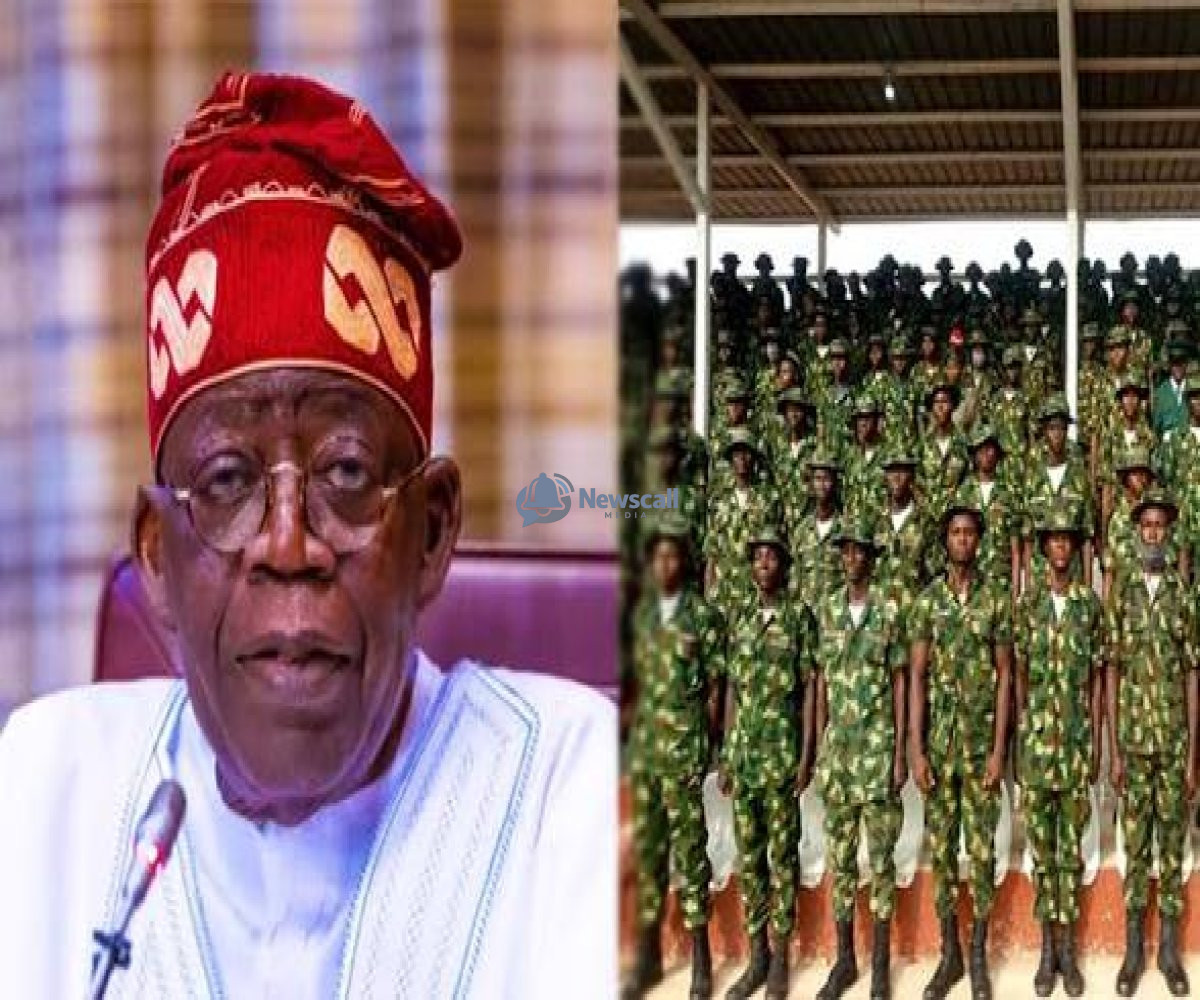
The Nigerian Army has presented evidence before the Federal High Court in Abuja, alleging the existence of a plot to overthrow the government of Bola Ahmed Tinubu. The revelation emerged during the ongoing trial of six individuals accused of orchestrating the alleged coup.
Testifying as part of the prosecution’s case, a witness from the Nigerian Army Corps of Military Police—whose identity was concealed for security reasons—outlined how intelligence reports led to the discovery of the alleged plot. According to the witness, the Chief of Army Staff received credible intelligence indicating a planned takeover, prompting a full-scale investigation.
Those standing trial include retired Major General Mohammed Ibrahim Gana, retired Naval Captain Erasmus Ochegobia Victor, Police Inspector Ahmed Ibrahim, and three others: Zekeri Umoru, Bukar Kashim Goni, and Abdulkadir Sani. The case, marked FHC/ABJ/CR/206/2026, involves charges ranging from treason and terrorism to money laundering.
The court also heard allegations linking former Bayelsa State governor Timipre Sylva to the plot. Prosecutors claimed Sylva fled the country before the operation was uncovered and is currently at large.
Central to the investigation was the arrest of Colonel Mohammed Alhassan Ma’aji, identified as a key figure in the alleged conspiracy. During his arrest, security operatives reportedly recovered a Samsung phone and a handwritten jotter containing sensitive materials. The jotter allegedly detailed operational strategies, names of targeted government officials, and proposed changes to the country’s leadership structure.
Further analysis of the phone reportedly uncovered communications linking multiple suspects to the alleged plot, including coded messages and coordination efforts. Financial records were also presented as evidence, with investigators tracing transactions involving the defendants and associated individuals.
A company identified as Purple Wave was mentioned as a conduit for funds used in the alleged operation. With assistance from the Economic and Financial Crimes Commission (EFCC), investigators reportedly uncovered transactions amounting to hundreds of millions of naira between September and October 2025. Although described as legitimate business payments, prosecutors argued the funds were diverted to finance the coup.
The witness further testified that several meetings were held in Abuja, including at Green Land Apartment and BrookVille Hotel, where discussions allegedly focused on executing the plot. Plans reportedly included targeting military barracks, controlling key road networks, and seizing strategic locations.
The court admitted multiple pieces of evidence, including financial documents, phone records, written statements, and a flash drive containing video recordings of the suspects’ confessions. However, defence counsel objected to aspects of the evidence presentation, prompting the court to order that materials be shared with the defence before further proceedings.
Justice Joyce Abdulmalik granted the prosecution’s request for certain witnesses to testify anonymously, citing the sensitive nature of the case and the need to protect their identities.
All defendants have pleaded not guilty to the charges and remain in custody of the Department of State Services (DSS). The trial has been adjourned to May 4 and 5, 2026, for continuation.
Allegations of coup plots are rare but highly sensitive in Nigeria, given the country’s history of military interventions in governance. Since the return to democratic rule in 1999, maintaining constitutional order has been a central priority for successive governments.
The involvement of both military and civilian suspects, as well as the alleged use of financial networks to support the operation, underscores the complexity of the case. It also highlights the role of intelligence gathering, inter-agency cooperation, and judicial oversight in addressing threats to national security.
The case further raises questions about political stability and the robustness of Nigeria’s democratic institutions. Claims involving high-profile individuals, including a former governor, add a political dimension that could influence public perception and discourse.
Legal proceedings of this nature are critical in determining the credibility of such allegations, ensuring due process, and reinforcing the rule of law. The court’s decision to allow anonymous witnesses reflects the potential risks associated with prosecuting cases involving national security.
The ongoing trial at the Federal High Court in Abuja has brought to light serious allegations of a coordinated attempt to overthrow President Bola Tinubu’s government. While the Nigerian Army and prosecutors have presented detailed claims supported by intelligence and financial evidence, the accused have denied all charges. As the case continues, the court’s findings will be pivotal in establishing the facts and reinforcing Nigeria’s commitment to democratic governance and legal accountability.

Nwekwe Esther Amarachukwu
Public speaker,Research-driven writer covering politics and public affairs, committed to accuracy, and meaningful public discourse.