


Beneath the City: The Engineering That Keeps the World Moving
Stand in the middle of a busy city.
You'll see skyscrapers stretching toward the sky.
Cars filling the roads.
People hurrying along sidewalks.
Trains arriving at stations.
Everything seems to happen above ground.
Yet beneath your feet lies another world.
A hidden world of tunnels carrying trains, water, electricity, internet cables, gas pipelines, and even giant machines that protect cities from floods.
It's an underground city built by engineers.
And creating it is one of the most difficult engineering challenges on Earth.
Digging a tunnel isn't as simple as removing soil.
Engineers must first understand exactly what lies beneath the surface.
They study layers of rock, groundwater, soil strength, and even old foundations left behind by previous generations.
In many historic cities, the underground is crowded with forgotten pipes, abandoned tunnels, and ancient structures.
One mistake could damage buildings above or disrupt essential services used by millions of people.
Once engineers know the ground conditions, they decide how the tunnel will be built.
For shorter projects, workers may dig from the surface before covering the tunnel again.
But for deep underground systems, engineers rely on one of the most impressive machines ever invented.
The Tunnel Boring Machine.
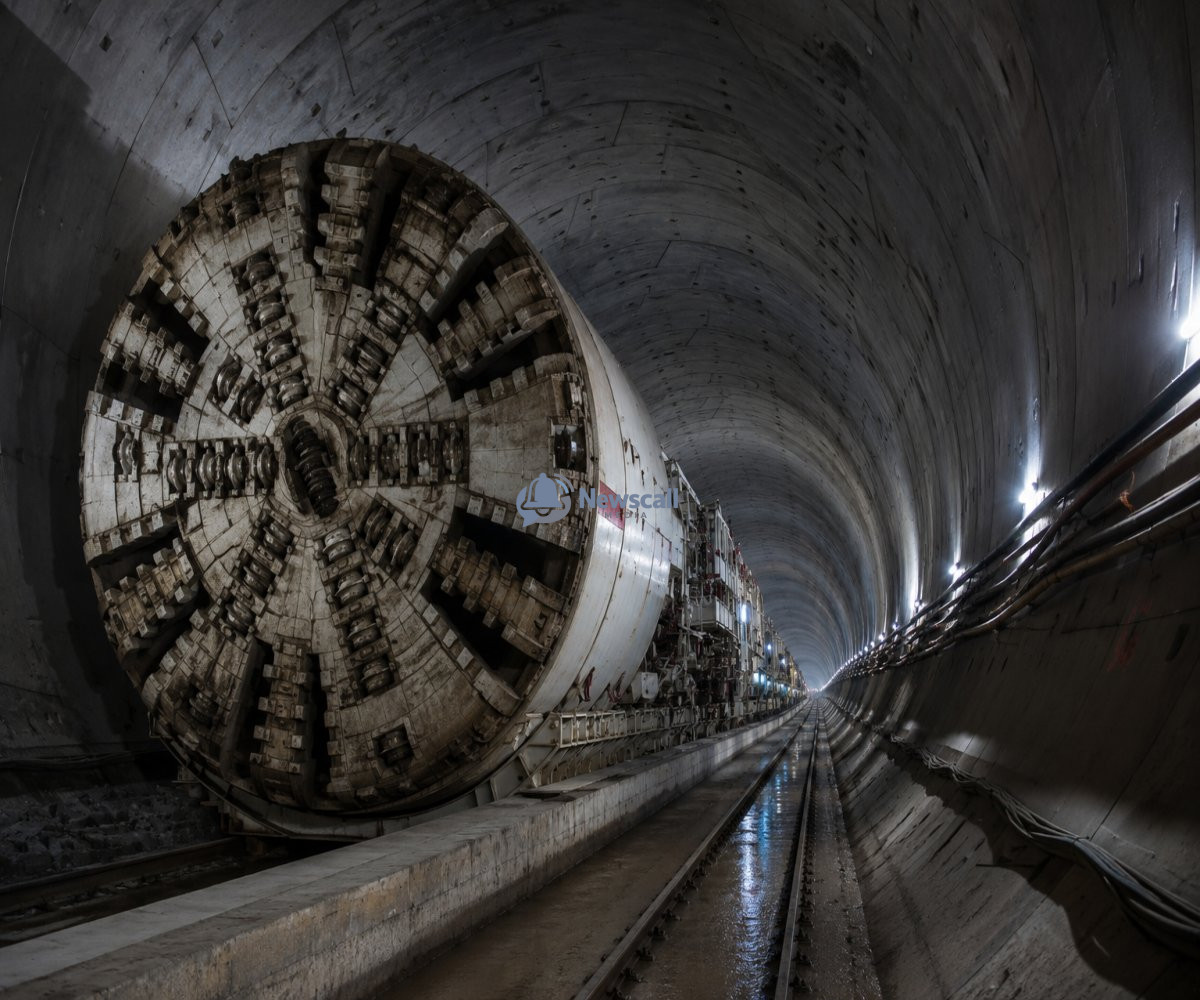
Often called a TBM, this enormous machine can be longer than two football fields.
At its front is a giant rotating cutter head equipped with hardened steel discs capable of breaking through rock and compacted soil.
As it slowly moves forward, the machine excavates the ground while conveyor systems remove the debris behind it.
At the same time, another part of the machine installs massive concrete segments that become the tunnel's permanent walls.
In other words, the tunnel is being built almost as quickly as it is being dug.
It is like watching a giant underground factory move through the Earth.
But the greatest challenge is often what engineers cannot see.
Groundwater.
Water naturally flows through soil and rock.
If not properly controlled, it can flood tunnels or weaken the surrounding ground.
Engineers use drainage systems, waterproof linings, and high-pressure sealing techniques to keep tunnels dry and stable for decades.
Then there are the buildings above.
Modern cities are packed with skyscrapers, hospitals, bridges, and homes.
Many sit directly above tunnel construction.
Engineers continuously monitor the ground using lasers, sensors, and satellite measurements capable of detecting movement as small as a few millimeters.
If the ground shifts unexpectedly, construction methods can be adjusted immediately.
Safety is another extraordinary achievement.
Underground tunnels require advanced ventilation systems that constantly circulate fresh air.
Powerful fans remove smoke during emergencies.
Fire-resistant materials protect passengers.
Emergency exits are carefully placed so people can evacuate quickly if needed.
Every detail is planned long before the first section of earth is excavated.
Some tunnels become engineering legends.
The Channel Tunnel connects the United Kingdom and France beneath the English Channel.
Japan has built extensive underground railway systems through some of the world's busiest cities.
Norway tunnels through mountains with remarkable precision.
Across the world, engineers continue building underground networks that make growing cities possible.
The future promises even more ambitious projects.
Some cities are expanding underground to create entire transportation networks below street level.
Others are building massive flood-control tunnels to protect millions of people from extreme weather.
Engineers are even designing robotic inspection systems that can monitor tunnels without interrupting traffic.
Most people will never see these remarkable structures.
They simply board a subway train, turn on a tap, or browse the internet without thinking about the miles of infrastructure hidden beneath them.
That may be the greatest compliment to the engineers who built them.
When their work is successful, it becomes almost invisible.
The next time you walk through a city, remember that the skyline tells only half the story.
Beneath every thriving city is another masterpiece of engineering.
A silent world of tunnels, machines, and carefully designed networks that keep modern life moving every single day.

Victor Oluebubechukwu Akuma.
Creative writer