Why the Future Internet May Feel More Like a Conversation Than a Website
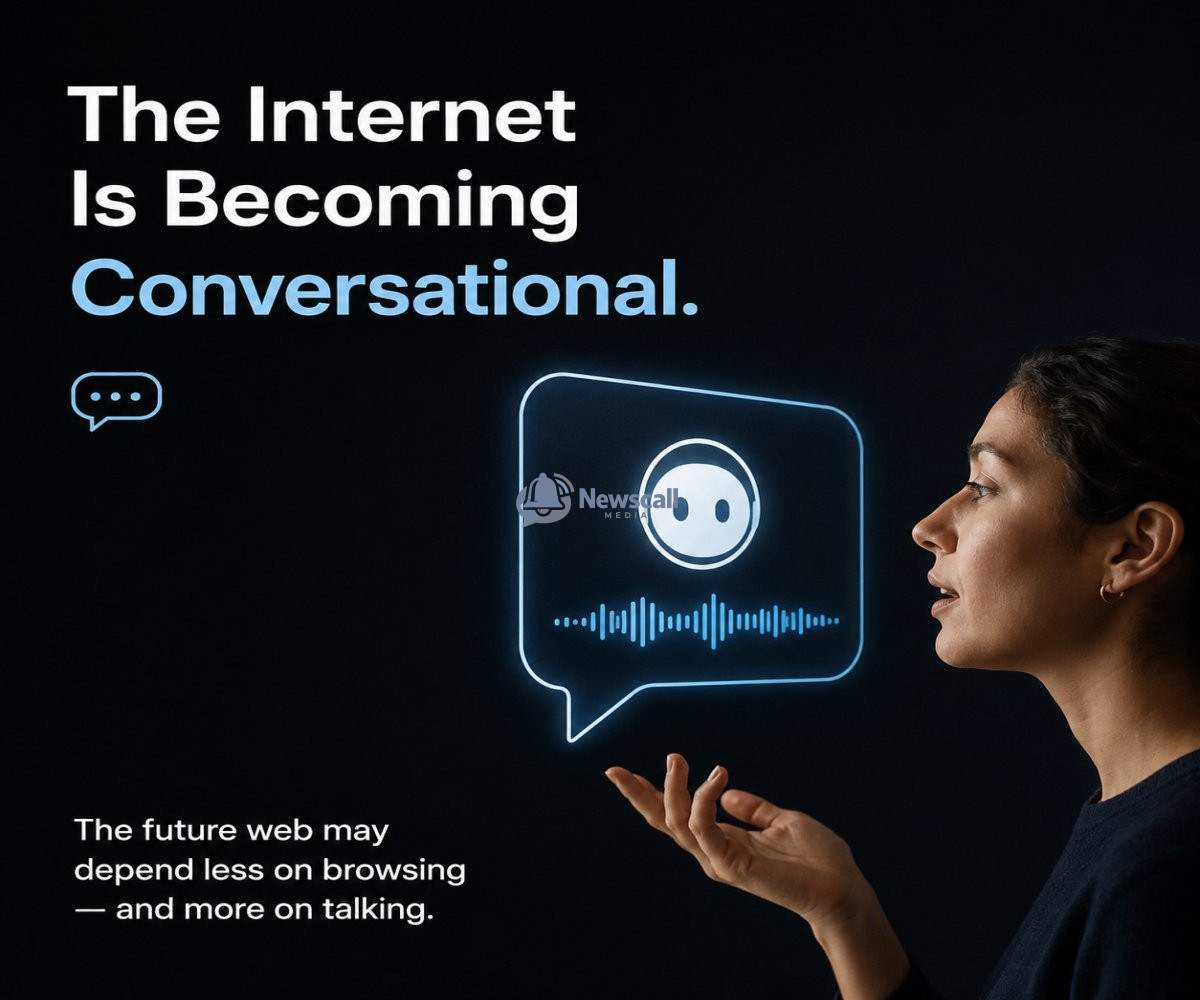
Opening multiple tabs, scanning search results, and manually piecing together information is still how much of the internet works today. But that experience is beginning to feel outdated as artificial intelligence reshapes how people interact with digital information.
A new pattern is emerging where users no longer rely on navigating websites step by step. Instead, they ask direct questions to AI systems and receive structured, immediate responses that already interpret and summarize the web.
The result is a fundamental shift in behavior. The internet is slowly moving away from being something people browse toward something they interact with.
---
This change is already influencing expectations around how information should be delivered. Speed is no longer enough on its own. Users are beginning to expect clarity without effort, answers without searching, and understanding without needing to visit multiple sources.
Artificial intelligence is making that possible by acting as an intermediary layer between people and the vast amount of information online.
“The internet is shifting from navigation to interaction.”
---
---
This evolution also raises important structural questions for the internet economy. For years, visibility online depended heavily on search rankings, clicks, and direct traffic to websites. Entire industries were built around competing for attention in search results.
As conversational AI systems become more capable, that structure begins to change. If users can get answers without opening multiple websites, then the traditional flow of traffic that supports much of the internet may gradually decrease or transform.
Publishers, creators, startups, and advertisers may all need to rethink how value is created in a system where answers are increasingly delivered directly rather than discovered manually.
---
Despite this shift, websites are not disappearing. They remain essential for commerce, applications, communities, and services that require interaction, depth, and functionality. What is changing is not the existence of websites, but their role in the discovery process.
Instead of being the first stop for information, websites may increasingly become the source material behind systems that interpret and deliver knowledge conversationally.
Over time, the internet may feel less like a collection of pages to navigate and more like an intelligent system that understands intent and responds directly.
That transition is still unfolding, but its direction is already becoming difficult to ignore.

Victor Oluebubechukwu Akuma.
Creative writer