


Why Airplanes Don't Get Struck by Lightning More Often
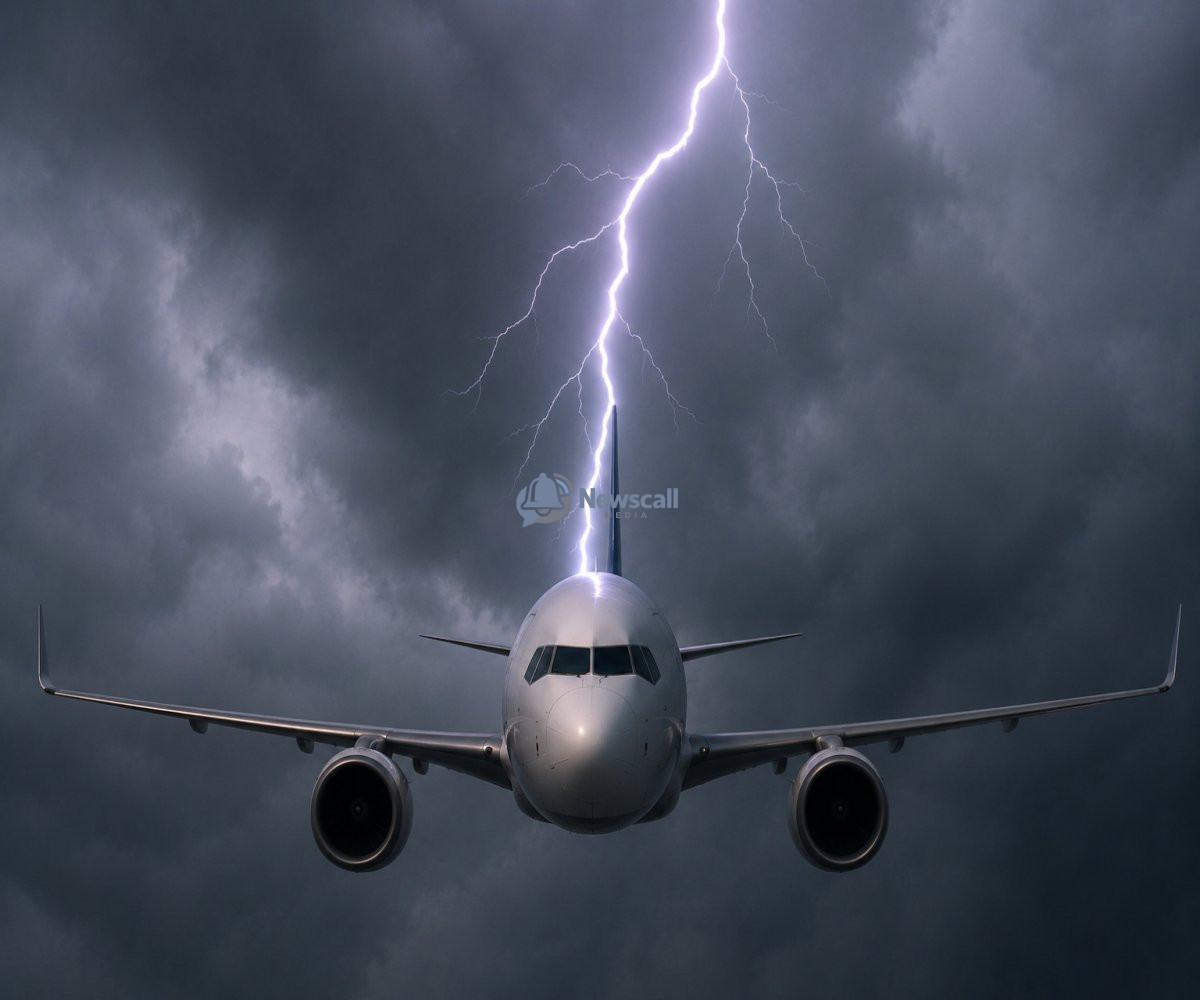
Lightning is one of nature's most powerful forces.
A single bolt can reach temperatures hotter than the surface of the Sun and carry hundreds of millions of volts of electricity. It's powerful enough to split trees, damage buildings, and knock out electrical systems in an instant.
So it's reasonable to wonder:
How do airplanes survive flying through storm clouds thousands of meters above the ground?
The surprising answer is that they often don't avoid lightning at all.
In fact, commercial aircraft are struck by lightning more frequently than most people realize—typically about once or twice a year over the course of their service life.
The real engineering achievement isn't preventing lightning strikes.
It's making sure they don't become dangerous.
An airplane in flight is actually designed to behave much like a giant metal shield.
When lightning strikes the aircraft, the electrical current usually enters through one point—often the nose, wingtip, or tail—and travels across the conductive outer skin before exiting through another point.
Instead of passing through the cabin, the electricity flows around it.
This principle is known as the Faraday cage effect.
Because the aircraft's outer structure conducts electricity so efficiently, passengers inside remain protected while the current safely travels around them.
In most cases, people on board never even realize a lightning strike has occurred.
Modern aircraft are also built with lightning in mind.
Every major commercial airplane undergoes extensive testing before entering service.
Engineers simulate lightning strikes using specialized equipment capable of generating enormous electrical currents. They study how electricity moves through the aircraft and ensure every critical system continues functioning safely.
Particular attention is given to sensitive electronics.
Navigation systems, communication equipment, flight computers, and cockpit instruments are carefully shielded against electromagnetic interference.
Without this protection, a nearby lightning strike could disrupt the very systems pilots depend on.
Fuel tanks receive special protection as well.
One of the greatest concerns is preventing a lightning strike from igniting fuel vapors.
To eliminate this risk, engineers use conductive bonding, protective meshes, and carefully designed fuel systems that safely redirect electrical energy away from vulnerable areas.
Modern aircraft also contain thousands of tiny electrical bonding strips.
These connect different metal components together, ensuring electricity flows smoothly across the aircraft instead of jumping unpredictably between parts.
As aircraft construction evolved, engineers faced a new challenge.
Many modern airplanes, including the Boeing 787 and Airbus A350, use lightweight carbon-fiber composites instead of traditional aluminum.
While composites are incredibly strong and reduce fuel consumption, they don't conduct electricity as effectively as metal.
The solution was ingenious.
Engineers embed thin layers of conductive materials—such as expanded copper or aluminum mesh—into the outer surface of composite aircraft.
These hidden layers restore the conductive pathway that allows lightning to safely travel around the aircraft.
Pilots also play an important role.
Using onboard weather radar, they actively avoid the most intense thunderstorm cells whenever possible.
This isn't because airplanes can't survive lightning.
It's because severe storms often contain hazards that are even more dangerous, including violent turbulence, hail, icing, and powerful updrafts.
Avoiding the storm avoids multiple risks at once.
Perhaps the most remarkable fact is how routine all of this has become.
Millions of people board commercial flights every day without thinking about lightning.
Behind the scenes, decades of engineering have transformed what was once a terrifying threat into a manageable part of aviation.
The next time you see lightning flashing outside an airplane window, remember this:
The aircraft wasn't built with the hope that lightning would never strike.
It was engineered with the expectation that, sooner or later, it would
And that's exactly why modern air travel remains one of the safest forms of transportation ever created.
Hashtags:
#Engineering #Aviation #Innovation #Technology #Science #STEM #Aircraft #ElectricalEngineering #MaterialsScience #AerospaceEngineering #EngineeringMarvels #Flight #TechExplained #Knowledge #MindCommunity

Victor Oluebubechukwu Akuma.
Creative writer