


The Forgotten Technologies That Could Have Changed Everything
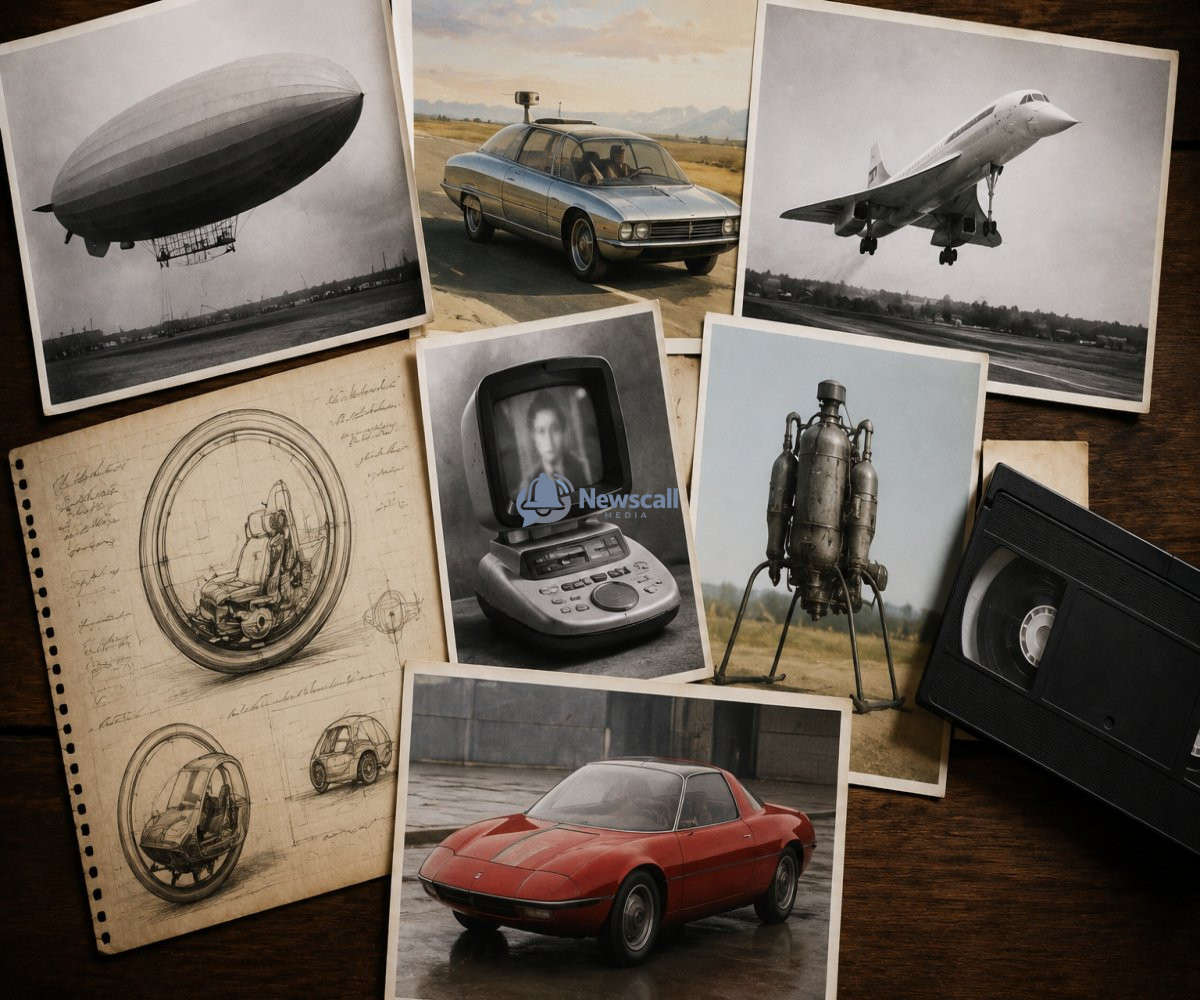
The Forgotten Technologies That Could Have Changed Everything
History is written by the winners.
We celebrate the inventions that transformed the world—the internet, airplanes, smartphones, and automobiles. But for every successful technology, there are dozens of innovations that never reached their full potential.
Some were ahead of their time. Others were too expensive, too ambitious, or simply overshadowed by competing solutions.
Yet many of these forgotten technologies contained ideas so revolutionary that, under different circumstances, they might have changed the course of human history.
1. Airships: The Luxury Future That Never Arrived
Long before commercial airplanes dominated the skies, airships appeared to be the future of long-distance travel.
Unlike early airplanes, they offered spacious cabins, dining areas, and remarkable comfort. Passengers could cross oceans while enjoying a level of luxury modern air travel rarely provides.
For a brief period, many experts believed giant airships would become the primary method of global transportation.
However, safety concerns, high-profile accidents, and rapid improvements in airplane technology ultimately ended the dream. Had history unfolded differently, our skies might look very different today.
2. The Picturephone: Video Calling Decades Too Early
Today, video calls are so common that people barely think about them.
But the concept existed long before Zoom, FaceTime, or Google Meet.
In the 1960s, engineers developed the Picturephone, allowing users to see the person they were speaking with in real time. Technologically, it was astonishing for its era.
The problem was timing.
The equipment was expensive, the infrastructure was limited, and consumers didn't yet see the need.
The idea failed commercially, only to return decades later when the internet made it practical.
3. Electric Cars Before Gasoline Dominated
Many people assume electric vehicles are a recent innovation.
In reality, electric cars existed before gasoline-powered cars became dominant.
During the late 19th and early 20th centuries, electric vehicles were quiet, easy to operate, and surprisingly popular.
But battery technology couldn't keep pace with improvements in internal combustion engines. Gas-powered vehicles became cheaper, traveled farther, and could be refueled quickly.
Electric vehicles faded into the background for more than a century.
Today, they are making a dramatic comeback using the same basic idea.
4. Personal Digital Assistants (PDAs)
Before smartphones existed, there were PDAs.
Devices such as the Palm Pilot allowed users to carry calendars, notes, contacts, and schedules in their pockets.
Looking back, they contained many of the core ideas behind modern smartphones.
What they lacked was powerful hardware, fast internet connectivity, and a robust app ecosystem.
The technology wasn't wrong.
The world simply wasn't ready for it yet.
5. Concorde: Supersonic Passenger Travel
Concorde remains one of the most remarkable aircraft ever built.
Capable of flying faster than twice the speed of sound, it could transport passengers across the Atlantic in roughly half the time of conventional aircraft.
For a moment, it seemed humanity was entering a future where supersonic travel would become normal.
Instead, high operating costs, fuel consumption, noise concerns, and economic challenges prevented widespread adoption.
The dream of routine supersonic passenger travel remains largely unrealized.
6. Betamax: The Better Technology That Lost
Innovation doesn't always reward the best product.
Betamax offered higher video quality than VHS and was widely regarded as the superior technology.
Yet VHS ultimately won the format war.
Why?
Longer recording times, broader licensing agreements, and greater market adoption.
The story became a classic example of how business strategy can sometimes matter more than technical superiority.
7. Nuclear-Powered Transportation
During the mid-20th century, engineers envisioned a future powered almost entirely by nuclear energy.
Concepts emerged for nuclear-powered airplanes, ships, trains, and even automobiles.
The technology promised extraordinary range and efficiency.
However, safety concerns, complexity, and public fear prevented these ideas from becoming reality.
While nuclear energy remains important in electricity generation, many of its most ambitious transportation applications never left the drawing board.
8. The Optical Disc That Came Before Streaming
Long before Netflix and YouTube, engineers were already experimenting with technologies capable of storing enormous amounts of digital information.
LaserDisc offered impressive video quality decades before DVDs became mainstream.
Although it never achieved mass-market success, it demonstrated possibilities that would later influence digital media storage and distribution.
Like many forgotten technologies, it served as a bridge to a future it would never personally enjoy.
9. Personal Jetpacks
For decades, inventors promised a future where individuals would fly through cities using personal jetpacks.
Numerous prototypes were built and successfully demonstrated.
The challenge wasn't whether they worked.
The challenge was making them practical, affordable, safe, and efficient.
Even today, personal flight remains more of a niche technology than a transportation revolution.
10. The Dynasphere
One of the strangest transportation concepts ever created was the Dynasphere—a giant wheel vehicle with the driver positioned inside.
The design promised efficiency and simplicity while reducing mechanical complexity.
It certainly attracted attention.
Unfortunately, steering difficulties and practical limitations prevented widespread adoption.
Today it remains one of history's most fascinating "what if" inventions.
The history of innovation is filled with forgotten ideas that never reached their destination.
Some failed because they were flawed.
Others failed because society wasn't ready.
And a surprising number failed despite being genuinely brilliant.
The next time you encounter a new technology that seems unnecessary or impractical, remember this:
Many of today's most important innovations once looked exactly the same.
Sometimes the difference between a forgotten invention and a world-changing breakthrough is nothing more than timing.

Victor Oluebubechukwu Akuma.
Creative writer