


The Cloud Isn't in the Sky—So Where Is It?
Almost everyone uses the cloud.
You upload photos to Google Photos.
Save files to Dropbox.
Stream movies on Netflix.
Back up your phone to iCloud.
Even sending an email often involves the cloud.
But have you ever stopped to ask a simple question?
Where exactly is "the cloud"?
Despite its name, the cloud isn't floating somewhere above the Earth.
It isn't hidden among the clouds in the sky.
And it certainly isn't magical.
The cloud is something much more real.
It's a network of massive buildings called data centers.
These facilities are filled with thousands—sometimes hundreds of thousands—of powerful computers known as servers.
Every photo you upload.
Every video you stream.
Every document you save online.
Every message you send.
At some point, all of that information is stored inside one of these servers.
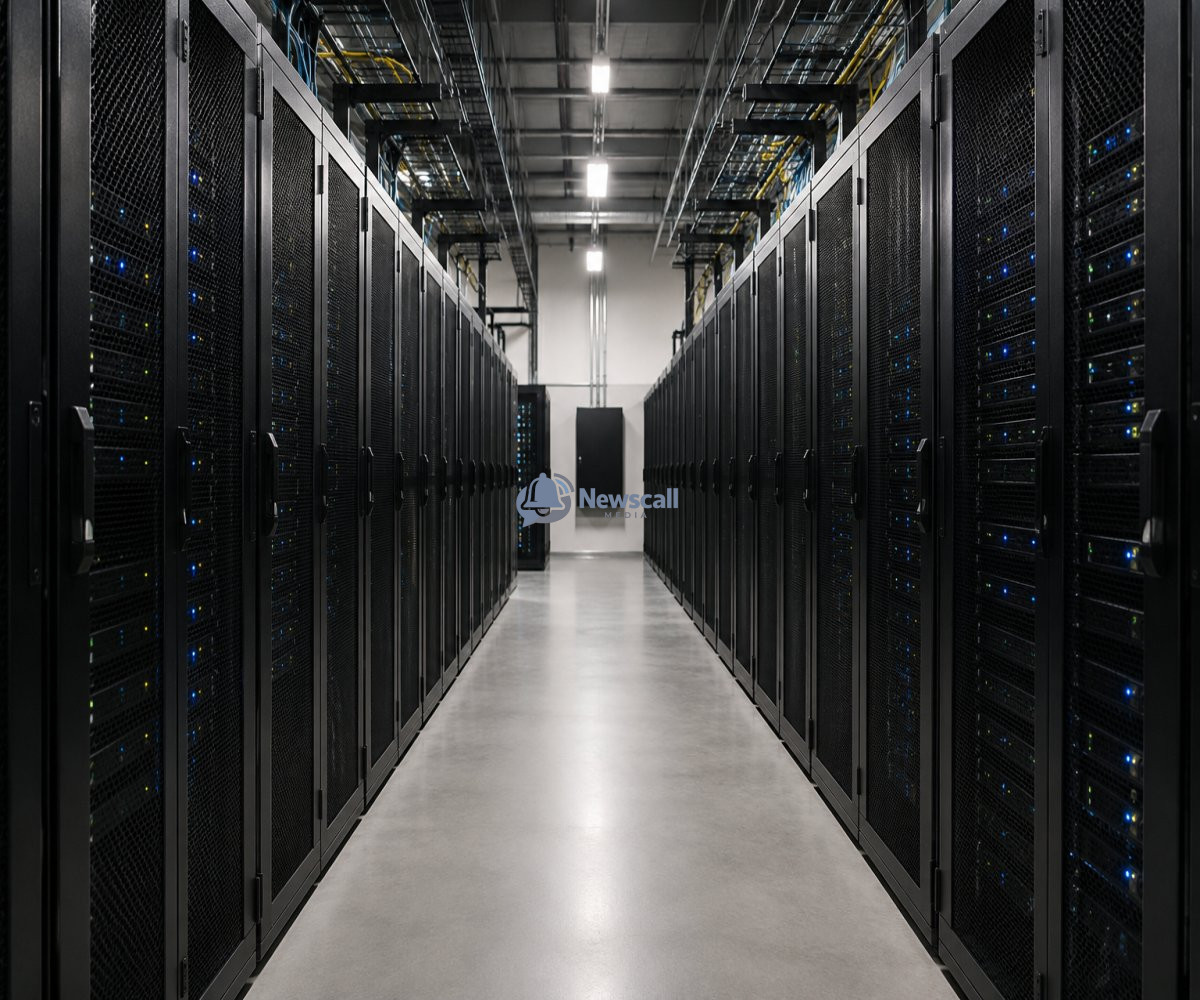
Imagine walking into a warehouse the size of several football fields.
Instead of shelves filled with products, you see endless rows of tall black cabinets.
Inside each cabinet are servers working day and night.
Bright lights blink constantly.
Cooling systems roar to prevent the machines from overheating.
Miles of cables connect everything together.
That is what the cloud actually looks like.
These data centers are located all over the world.
Technology companies build them close to major cities so information can travel quickly to users.
Some are hidden in remote areas.
Others are built underground.
Many are placed near rivers or colder regions to help keep the equipment cool while reducing energy costs.
When you upload a selfie from Nigeria, for example, it doesn't disappear into the sky.
It travels through your mobile network or Wi-Fi, moves across undersea fiber-optic cables or other high-speed internet connections, and eventually reaches a server inside one of these data centers.
The process usually takes less than a second.
The next time you open that photo, the journey happens in reverse.
The server finds your file and sends it back across the internet to your phone.
It feels instant.
But behind the scenes, millions of tiny operations are taking place.
The cloud is also designed for reliability.
Your important files are rarely stored in just one location.
Instead, companies often keep multiple copies in different data centers.
If one facility experiences a power outage or another problem, another can continue serving your data.
That's why cloud services remain available most of the time.
Keeping these facilities running is an engineering challenge of its own.
Servers generate enormous amounts of heat.
Without powerful cooling systems, they would quickly overheat and fail.
Many data centers consume as much electricity as a small town.
To improve efficiency, companies are increasingly using renewable energy, advanced cooling technologies, and artificial intelligence to manage power consumption.
As AI becomes more popular, these data centers are becoming even more important.
Training and running modern AI models requires thousands of specialized computer chips working together.
Many of them operate inside the same facilities that store your photos and emails.
In many ways, the cloud has become the invisible backbone of modern life.
Banks rely on it.
Hospitals rely on it.
Businesses rely on it.
Schools rely on it.
Streaming platforms, online games, navigation apps, and even smart home devices all depend on data centers working around the clock.
The greatest technologies often hide in plain sight.
We hear the word "cloud" so often that it sounds almost imaginary.
Yet the cloud is one of the most physical technologies ever built.
It's made of concrete buildings.
Steel racks.
Fiber-optic cables.
Power systems.
Cooling equipment.
And millions of servers working every second of every day.
So the next time someone says your files are "in the cloud," you'll know the truth.
They aren't floating somewhere in the sky.
They're sitting inside one of the largest engineering systems humanity has ever created—waiting to be delivered back to you in the blink of an eye.

Victor Oluebubechukwu Akuma.
Creative writer