


Factories That Know When They're About to Break Down
Imagine if your car could tell you exactly when a part was going to fail.
Not after it breaks.
Not when the warning light comes on.
But days or even weeks before the problem appears.
That idea is becoming reality inside modern factories.
Across the world, industrial facilities are gaining a remarkable new ability: predicting equipment failures before they happen.
For decades, factories relied on two approaches to maintenance.
The first was reactive maintenance.
Something breaks, production stops, technicians fix the problem, and operations resume.
The second was preventive maintenance.
Machines are inspected or repaired according to a schedule, whether they need it or not.
Both methods have drawbacks.
Unexpected breakdowns can cost millions of dollars in lost production. Scheduled maintenance can lead to unnecessary repairs and downtime.
Now, a third approach is transforming industry.
Predictive maintenance.
Instead of waiting for problems or following rigid schedules, factories are using technology to monitor equipment continuously and identify warning signs before failures occur.
The secret lies in data.
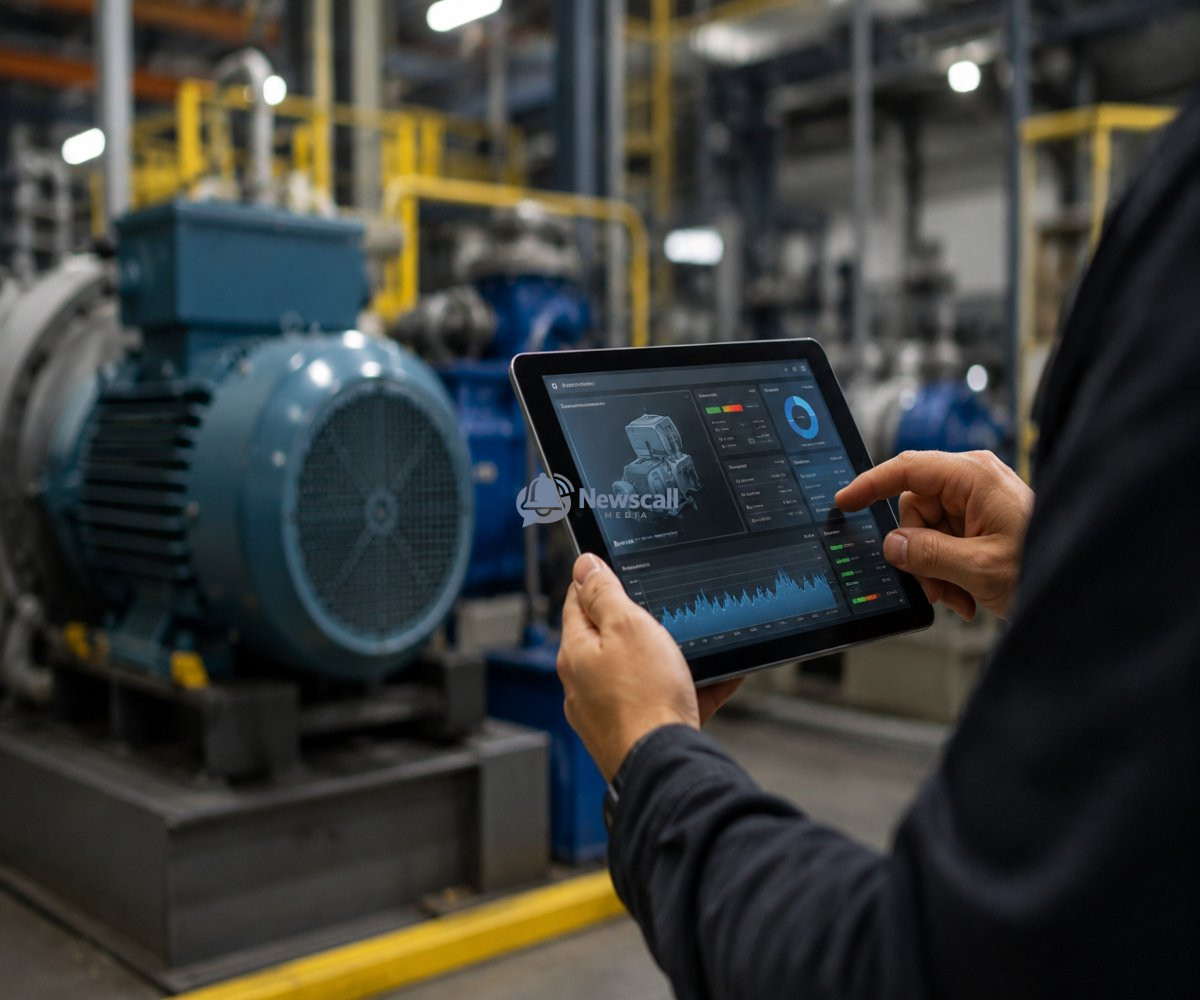
Modern industrial machines are equipped with sensors that constantly collect information. These sensors track temperature, vibration, pressure, sound, energy consumption, and countless other measurements.
Every second, thousands of data points are generated.
To a human, the information would be overwhelming.
To artificial intelligence, it is a valuable source of insight.
AI systems analyze the data and look for unusual patterns. A motor may begin vibrating slightly differently. A bearing may generate more heat than normal. A pump may consume a little more power than expected.
These changes can be early indicators of a developing problem.
Often, the differences are too small for workers to notice.
The machines notice them anyway.
When a potential issue is detected, maintenance teams receive alerts before the equipment fails.
Instead of responding to emergencies, they can schedule repairs at the most convenient time.
The benefits are enormous.
Factories can reduce costly downtime, extend the lifespan of equipment, improve worker safety, and lower maintenance expenses.
For industries where every minute of production matters, the impact can be significant.
Some of the world's largest manufacturing facilities already depend on these systems.
Automotive plants, semiconductor factories, energy companies, mining operations, and logistics centers are increasingly using predictive technologies to keep operations running smoothly.
The concept is sometimes described as giving machines a voice.
For the first time, equipment can effectively communicate its condition before something goes wrong.
But the technology goes beyond simply predicting failures.
Advanced systems can identify the specific component likely to fail, estimate how long it may continue operating, and recommend the most effective solution.
Future factories may become even smarter.
As sensors become cheaper and AI continues to improve, industrial facilities could eventually monitor every major piece of equipment in real time.
Entire factories may operate as connected ecosystems where machines continuously share information about their health and performance.
This is part of a broader movement often called Industry 4.0, where digital technologies are transforming manufacturing through automation, connectivity, and intelligent decision-making.
The goal is not to replace human workers.
It is to give them better information.
Engineers and technicians can focus on solving problems before they become crises rather than reacting after damage has already occurred.
Of course, no system is perfect.
Unexpected failures can still happen. Sensors can malfunction. Data can be misinterpreted.
Yet the technology continues to improve every year.
The bigger picture is fascinating.
For most of human history, machines remained silent until they broke.
Today, they are beginning to tell us when something is wrong.
Tomorrow, they may tell us exactly how to fix it.
Factories that can predict their own failures may sound like science fiction.
In reality, they are already becoming one of the most important innovations in modern industry.
And they are helping ensure that the world's factories spend less time broken and more time building the future.

Victor Oluebubechukwu Akuma.
Creative writer