


Billion-Dollar Businesses That Started as Side Projects
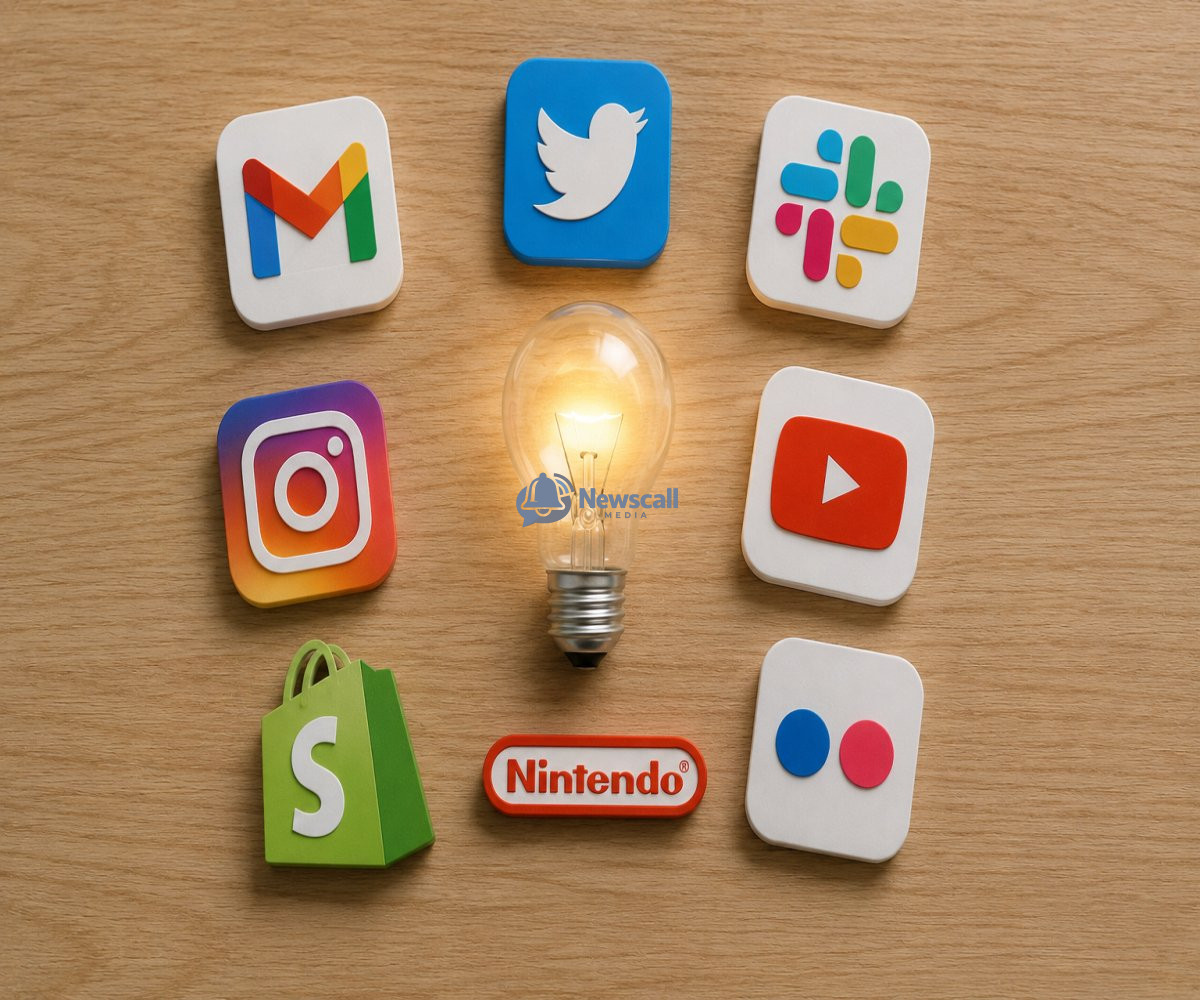
Every successful company begins somewhere.
Most people imagine a founder quitting their job, raising millions of dollars, renting an office, and building the next global business from day one.
Reality is often far less dramatic.
Some of the world's most valuable companies didn't begin as carefully planned startups at all. They started as experiments after work, hobbies pursued on weekends, or solutions to personal frustrations. Their founders weren't trying to build billion-dollar businesses.
They were simply trying to solve a problem.
Only later did the rest of the world realize those problems were worth billions.
Here are eight companies that prove side projects can sometimes become industry giants.
1. Gmail
Today, billions of people use Gmail without giving it a second thought.
What many don't know is that Gmail began as a side project inside Google.
Engineer Paul Buchheit wanted a better email experience than what existed at the time. Existing services offered tiny storage limits and slow search capabilities.
Working largely as an internal project, he built an email service that prioritized speed, search, and generous storage.
When Gmail launched in 2004 with an astonishing one gigabyte of free storage, it completely changed expectations for web-based email.
A side experiment eventually became one of the world's most widely used communication platforms.
2. Twitter (Now X)
Twitter wasn't originally the company's main idea.
The team behind podcasting startup Odeo faced an uncertain future after Apple launched its own podcast platform through iTunes.
During brainstorming sessions, one employee proposed a simple service where people could post short status updates to friends.
The concept sounded almost trivial.
Few imagined that brief messages limited to just a handful of characters would one day shape politics, business, sports, entertainment, and global news.
That side project became Twitter.
3. Slack
Slack was never supposed to exist.
Its founders were building an online multiplayer video game called Glitch.
The game struggled to attract enough players and was eventually shut down.
But while developing it, the team had created an internal messaging tool to help employees communicate more efficiently.
They realized the communication software was solving a much bigger problem than the game itself.
That internal tool evolved into Slack, which transformed workplace collaboration and became one of the world's leading business communication platforms.
Sometimes the product built to support the main idea becomes the real opportunity.
4. Instagram
Before Instagram became one of the world's most influential social media platforms, its founders were working on an app called Burbn.
The application tried to do everything at once.
It included check-ins, location sharing, gaming features, event planning, messaging, and photo uploads.
Users found it confusing.
The founders noticed something interesting.
People were using only one feature consistently.
They loved sharing photos.
Instead of adding more features, the team removed nearly everything else.
The result was Instagram.
The billion-dollar business wasn't created by adding complexity.
It was created by removing it.
5. YouTube
YouTube's original vision looked very different from the platform we know today.
Its founders initially imagined it as a video-based dating website where people could upload personal introduction videos.
The concept never gained traction.
As users began uploading all kinds of videos instead, the founders recognized a far bigger opportunity.
They abandoned the dating concept and embraced general video sharing.
That simple pivot created one of the largest media platforms in history.
6. Shopify
Before Shopify became one of the world's leading e-commerce platforms, its founders simply wanted to sell snowboards online.
Unable to find software that met their needs, they built their own online store.
Soon they realized something surprising.
Other businesses needed the software even more than they needed another snowboard retailer.
Instead of selling snowboards, they began selling the platform itself.
Today, millions of businesses around the world use Shopify to power their online stores.
7. Nintendo
Few people realize Nintendo didn't begin as a video game company.
Founded in 1889, it originally produced handcrafted playing cards in Japan.
Over the following decades, the company experimented with taxis, hotels, toys, food products, and several other businesses.
Many of those ventures failed.
Eventually, Nintendo focused on electronic entertainment.
That willingness to evolve transformed a traditional card manufacturer into one of the biggest names in gaming.
8. Flickr
Flickr also emerged from a failed game project.
Its creators were building an online game that included a feature allowing players to share images.
The game never achieved lasting success.
The photo-sharing feature, however, attracted significant attention.
Recognizing where the real value lay, the founders shifted their focus entirely.
The side feature became Flickr, one of the internet's earliest and most influential photo-sharing platforms.
These stories reveal something many aspiring entrepreneurs overlook.
Successful businesses don't always begin with billion-dollar visions.
They often begin with curiosity.
A personal inconvenience.
An experiment.
A tool built for internal use.
A feature users unexpectedly love.
The founders who succeed aren't necessarily the ones with the perfect original idea.
They're the ones willing to notice when something else is working better than the plan they started with.
Perhaps the greatest lesson is this:
Never underestimate a small project.
History has shown that side projects have launched search engines, social networks, workplace software, e-commerce platforms, and entire industries.
The next billion-dollar business may not be hidden inside an expensive startup accelerator or a boardroom strategy session.
It might already be sitting in someone's notebook, running quietly on a laptop after work, waiting for the world to discover it.

Victor Oluebubechukwu Akuma.
Creative writer